

Introduction
The Sanchi Stupa, situated on a peaceful hilltop in the Raisen district of Madhya Pradesh, is one of the oldest and most important stone structures in India. Commissioned by Emperor Ashoka the Great of the Maurya Dynasty in the 3rd century BCE, this iconic Buddhist monument stands as a magnificent testament to India's rich spiritual, architectural, and artistic heritage. Inscribed as a UNESCO World Heritage Site in 1989, Sanchi is globally recognized as the cradle of Buddhist art and architecture.
The sanctuary complex at Sanchi encompasses a vast collection of Buddhist monuments including stupas, monolithic Ashokan pillars, temples, monasteries, and intricate gateways (Toranas). The central attraction, known as the Great Stupa (Stupa No. 1), houses sacred relics of Lord Buddha. What makes Sanchi truly extraordinary is that Lord Buddha never physically visited Sanchi in his lifetime; yet, it evolved into one of the most prominent international centers of Buddhist worship and pilgrimage for over thirteen centuries.
Perched amidst tranquil greenery with sweeping views of the Betwa River valley, Sanchi offers a serene and deeply reflective experience for history lovers, pilgrims, and architecture enthusiasts. Walking around the ancient circumambulatory pathways and admiring the exquisite stone carvings on the gateways allows visitors to trace the evolution of early Indian sculpture and Buddhist philosophy.
Why Visit Sanchi Stupa?
- UNESCO World Heritage Site housing the oldest existing stone structure in India.
- Commissioned by Emperor Ashoka in the 3rd century BCE following his embrace of Buddhism.
- Famous four ornamental stone gateways (Toranas) depicting detailed stories from the Jataka tales.
- Preserves an extraordinary continuity of Indian architectural styles from the Mauryan to the Gupta periods.
- Serene hilltop setting providing panoramic views of the surrounding rural landscape.
- Home to the famous Sanchi Archaeological Museum housing the iconic Ashoka Lion Capital and ancient statues.
- Located close to Bhopal, making it an easy day-trip destination for culture seekers.
History
The history of Sanchi begins in the 3rd century BCE under the patronage of the Mauryan Emperor Ashoka the Great. Following the tragic bloodshed of the Kalinga War, Ashoka embraced Buddhism and dedicated his empire to spreading the teachings of peace and Dhamma. He selected the hilltop of Sanchi (then known as Kakanaya or Chetiyagiri) because it was near the prosperous merchant city of Vidisha, where his queen Devi resided. Ashoka commissioned the original brick stupa structure, embedding sacred relics of the Buddha within its core, and erected a polished sandstone pillar near its southern entrance.
During the 2nd century BCE, under the rule of the Shunga Dynasty, the original brick stupa was damaged and subsequently rebuilt with stone blocks to twice its original size. The dome was covered with smooth stone casing, and a stone balustrade was added around the base. It was during the Satavahana Dynasty in the 1st century BCE that the four magnificently carved ornamental stone gateways (Toranas) were added at the four cardinal points. Artisans who specialized in ivory carving from nearby Vidisha executed these detailed reliefs, creating a masterwork of ancient narrative art.
Sanchi continued to flourish under the patronage of the Kushan and Gupta empires through the 12th century AD. Beautiful monasteries, temples (such as Temple 17, one of the earliest classical Gupta temples), and statues were added over centuries. With the decline of Buddhism in India and the rise of political shifts, Sanchi was abandoned during the 14th century and lay forgotten under thick jungle cover. In 1818, General Henry Taylor of the British Army rediscovered the site, initiating decades of conservation that culminated in Sir John Marshall's extensive restoration between 1912 and 1919.
Main Attractions
Great Stupa (Stupa No. 1)
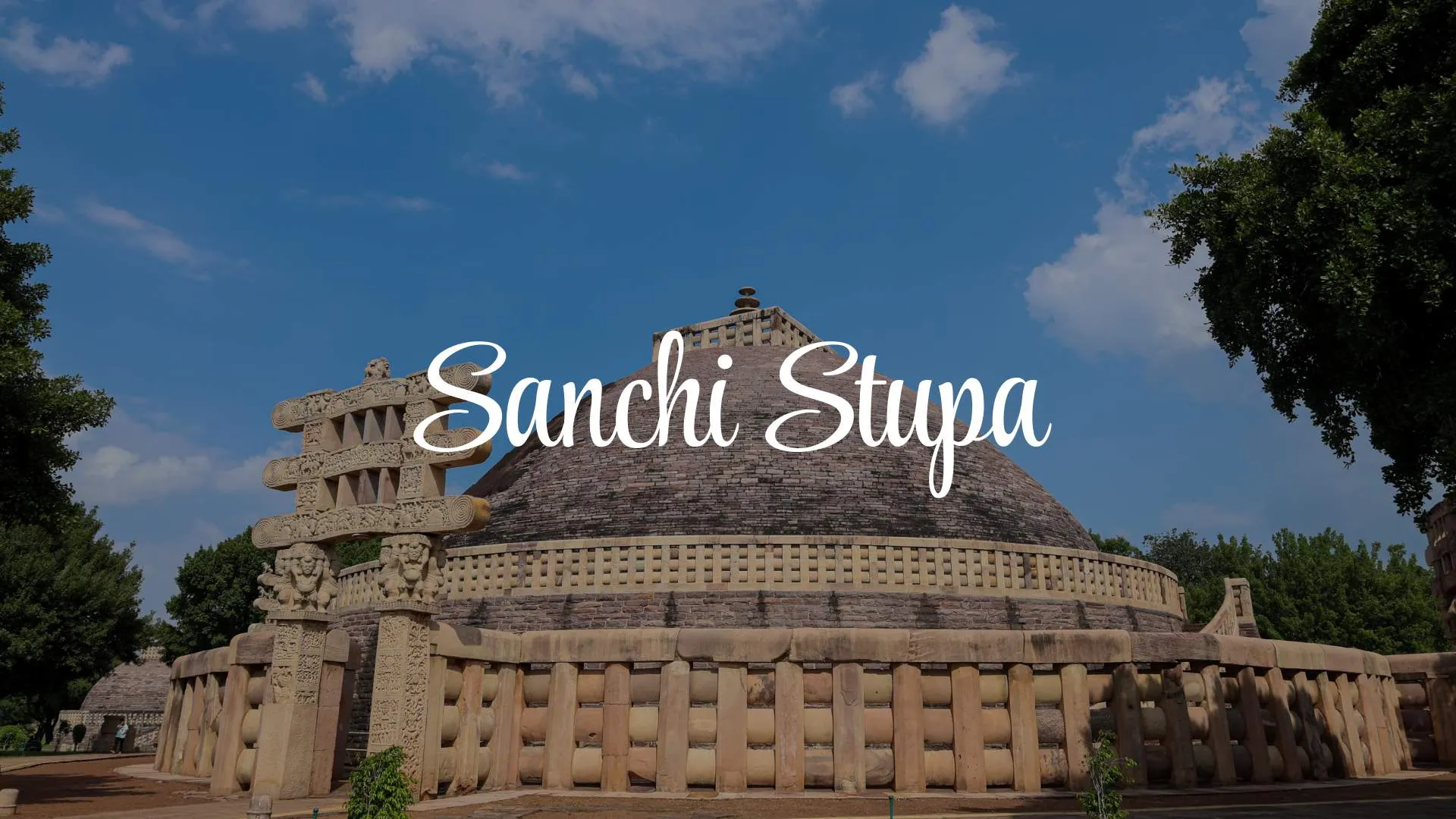
The Great Stupa is the focal monument of Sanchi, featuring a massive hemispherical dome measuring 36.5 metres in diameter and standing 16.5 metres high. The dome symbolizes the vault of heaven enclosing the earth. At its apex sits a square railing (harmika) enclosing a three-tiered stone umbrella (chhatravali) representing the Three Jewels of Buddhism: the Buddha, the Dharma, and the Sangha. Surrounding the stupa is an elevated processional path (medhi) accessed by dual stairways.
The Four Toranas (Gateways)
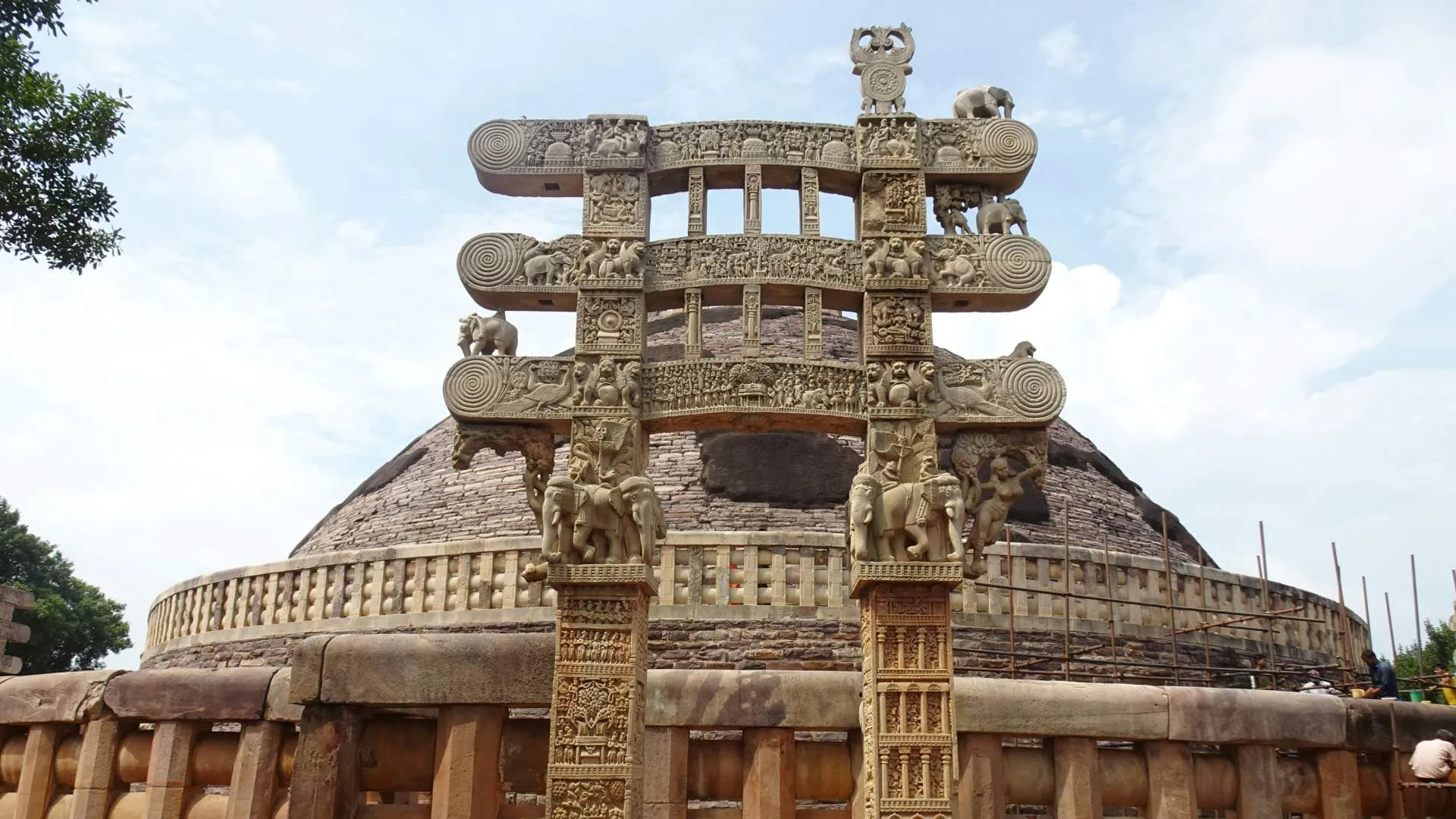
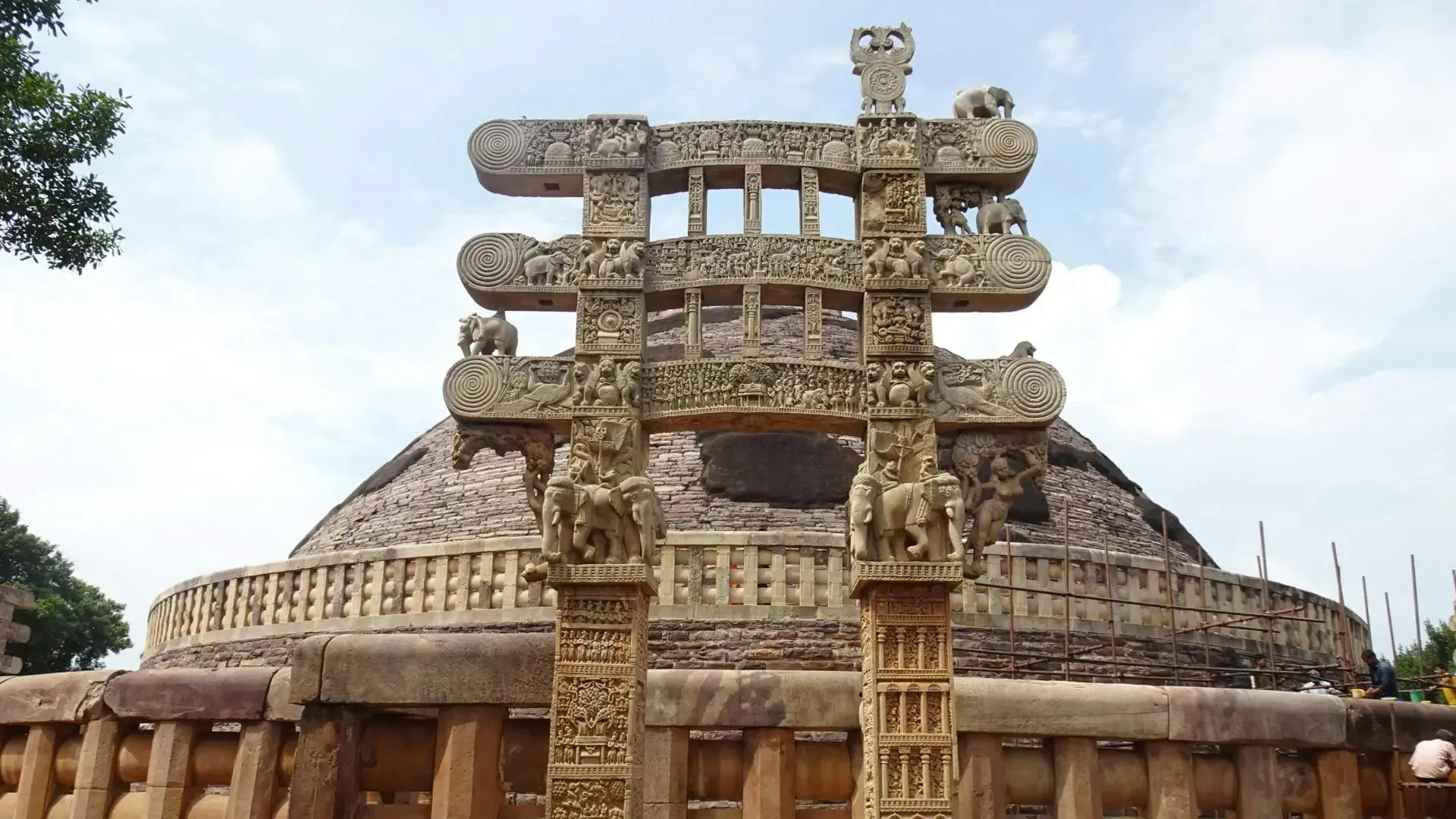
The four gateways situated at the cardinal points of the Great Stupa are world-famous masterpieces of stone sculpture. Each gateway consists of two square pillars supporting three curved crossbeams (architraves). The carvings depict episodes from the life of the Buddha, his past lives described in the Jataka Tales, and royal processions. Notably, the Buddha is represented through symbols such as the Bodhi tree, footprint, lotus, wheel of law (Dharmachakra), and an empty throne, reflecting early aniconic Buddhist tradition.
Ashoka Pillar (Pillar No. 25)
Located near the Southern Gateway of the Great Stupa, the Ashoka Pillar is a fine example of Mauryan polished stonework. Carved from a single piece of Chunar sandstone, the pillar originally stood over 42 feet high bearing Ashoka's royal edicts warning against schisms in the Buddhist Sangha. Although broken today, its base remains in situ, while its famous four-lion capital is displayed in the nearby museum.
Stupa No. 3
Situated near the Great Stupa, Stupa No. 3 is notable for housing the sacred relics of the Buddha's two chief disciples, Sariputta and Maha Moggallana. Built during the Shunga period, it features a single beautifully carved Torana gateway that depicts floral patterns, sacred symbols, and celestial beings.
Gupta Temple (Temple 17)
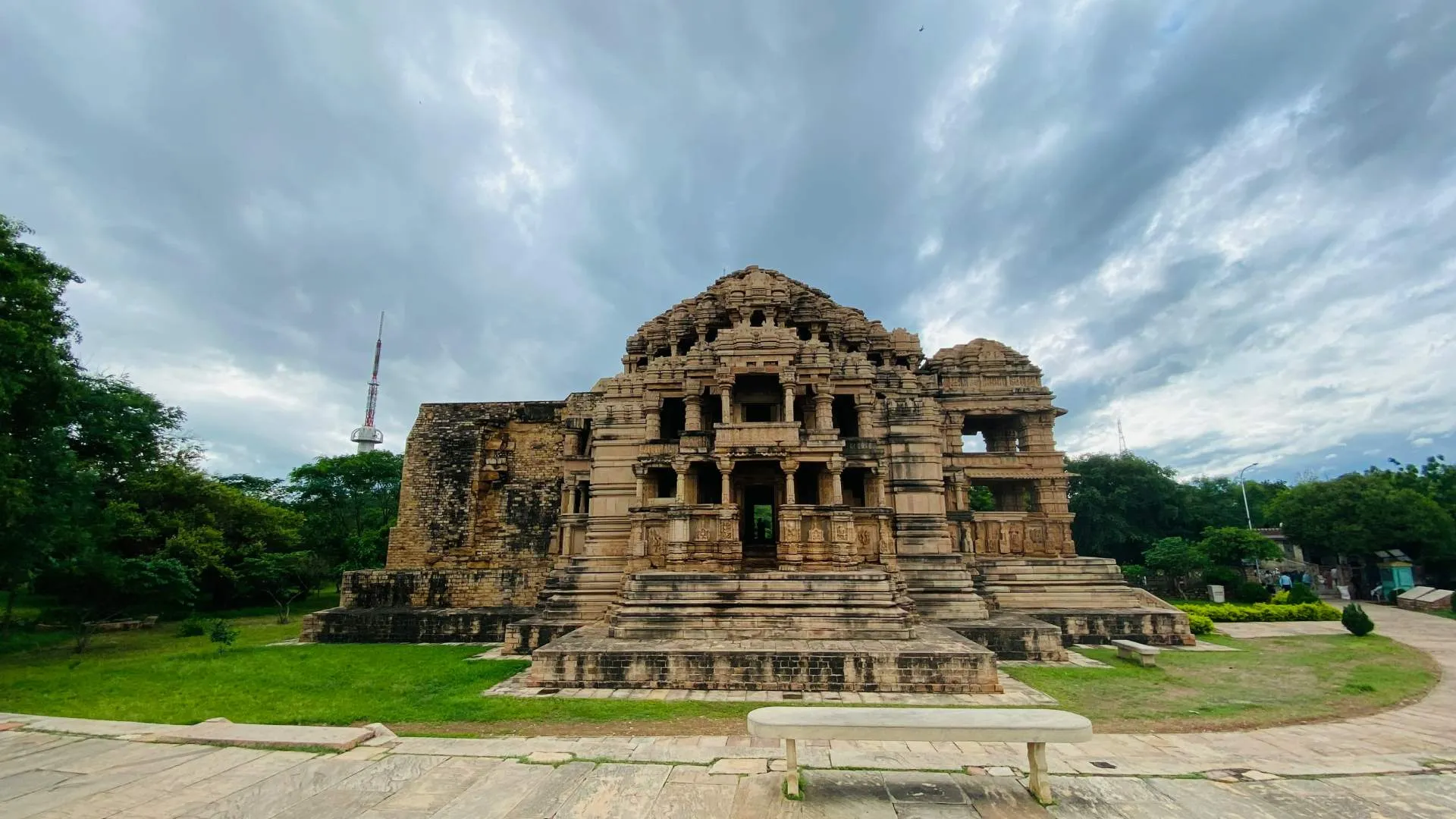
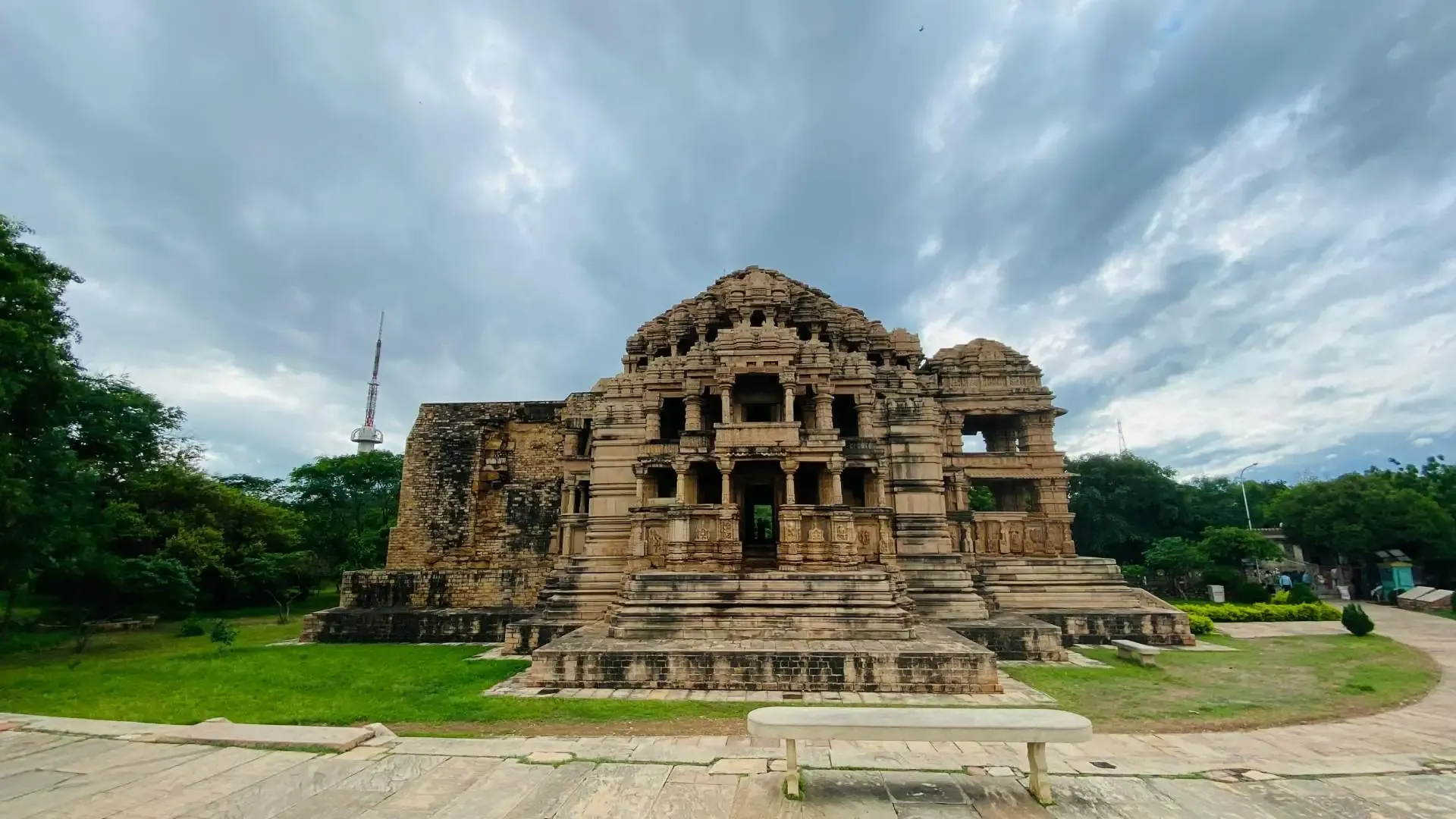
Temple 17 is a architectural gem from the 5th century AD, representing one of the earliest surviving examples of classical Indian temple architecture. Featuring a simple square sanctum preceded by a four-pillared porch with carved lion capitals, its clean structural proportions inspired centuries of temple design across India.
Sanchi Archaeological Museum
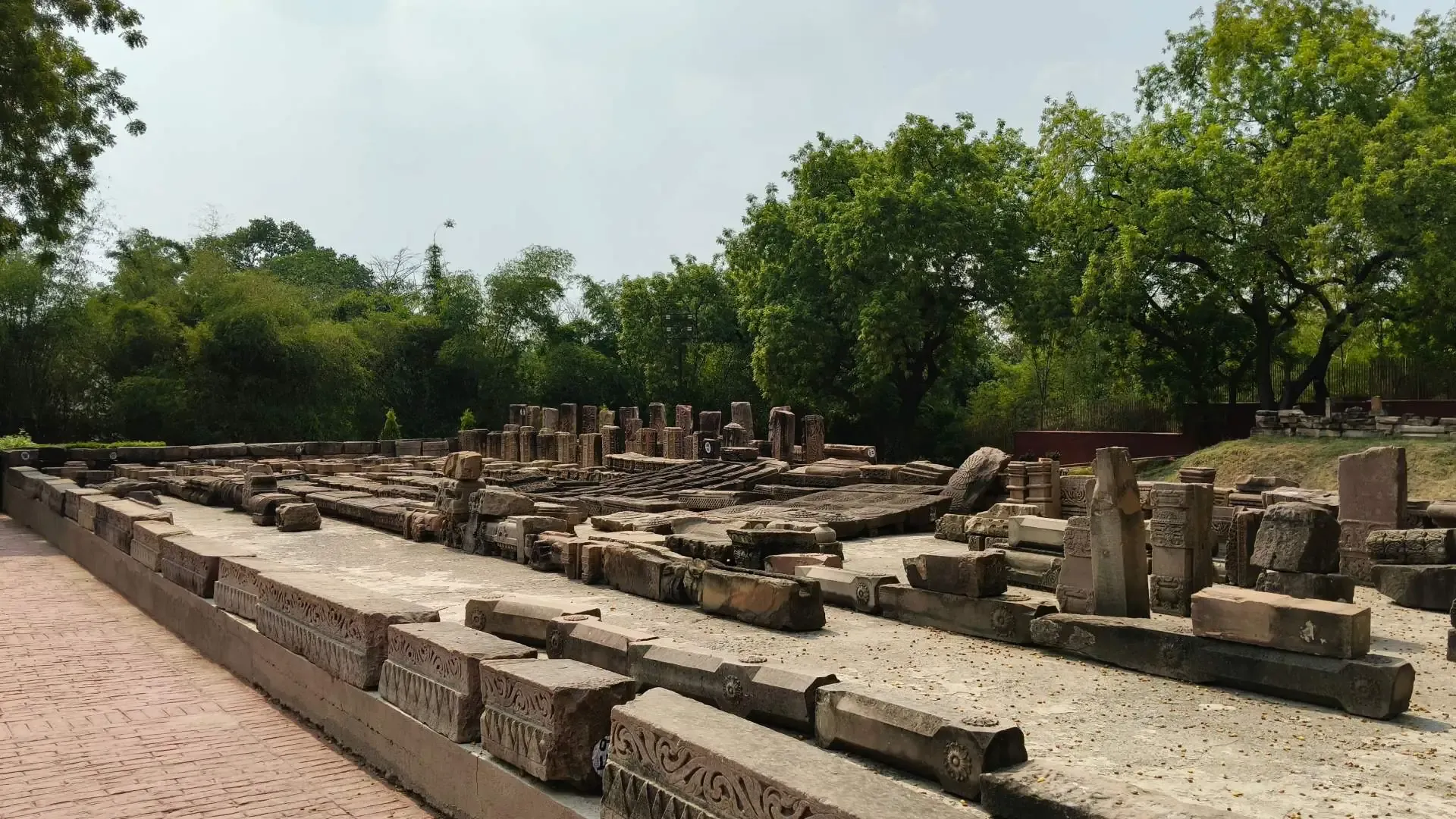
Located at the foot of the hill, the Sanchi Museum houses an extraordinary collection of artifacts excavated from the hilltop. Highlights include the magnificent 3rd century BCE Ashokan Lion Capital, stone statues of the Buddha, carved Yakshi figures, ancient coins, iron tools, and pottery fragments spanning over a thousand years.
Monasteries (Monastery 51 & 45)
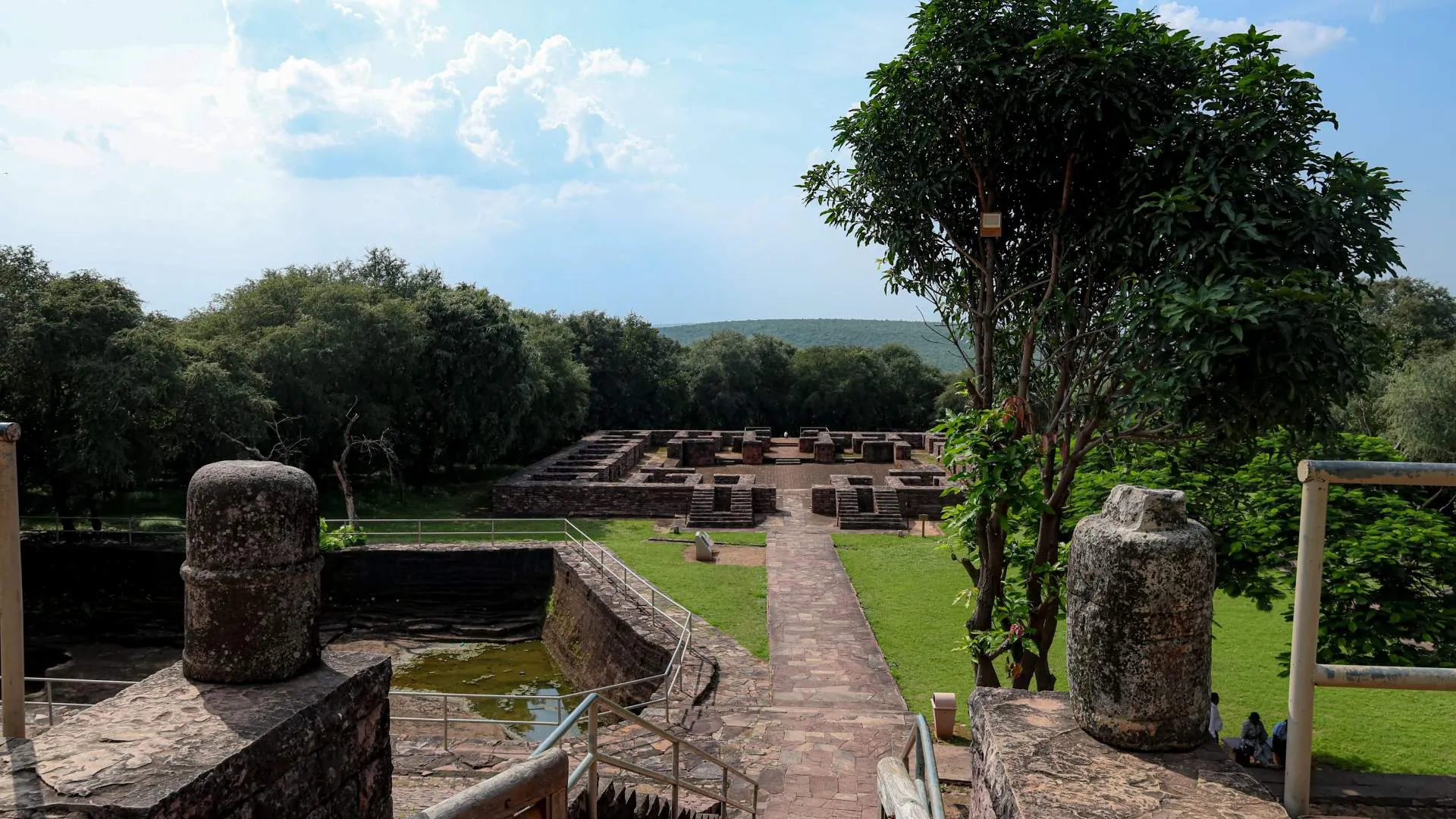
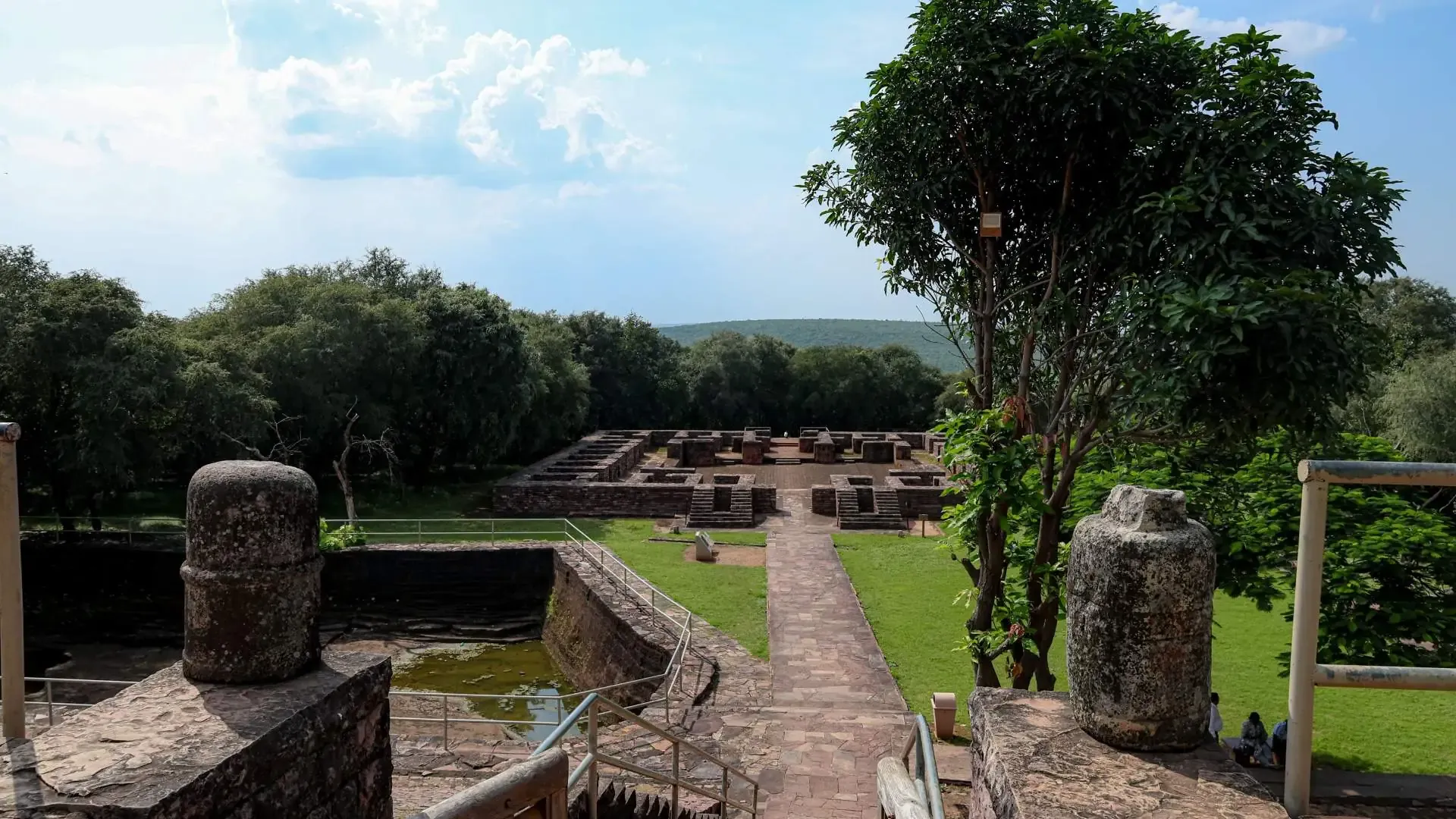
The hilltop features ruins of several Buddhist monasteries where monks lived, studied, and meditated. Monastery 51 features a spacious central open courtyard surrounded by monk cells, an ancient stone water reservoir, and a massive bowl carved out of solid rock used for distributing food to monks.
Architecture / Natural Highlights
The architecture of Sanchi presents a complete visual history of the development of Indian stone masonry from primitive timber-inspired designs to sophisticated classical forms. The Great Stupa's hemispherical design represents the mound of creation, with every architectural element holding deep Buddhist cosmic symbolism. The dry-stone construction uses massive sandstone blocks quarried from Nagauri Hill, set without mortar and secured through precise gravity balancing.
The carved Toranas showcase remarkable technique, transferring delicate ivory-carving skills onto stone. Architectural highlights include the famous Salabhanjika (bracket figure of a tree nymph clinging to a mango branch), which displays unprecedented fluid elegance and anatomic realism. The seamless blending of Buddhist spiritual symbolism with traditional Indian folk motifs like elephants, peacocks, lotus scrolls, and nagas highlights the inclusive nature of ancient Indian art.
Geographically, Sanchi is perched atop a tranquil sandstone hill elevated 90 metres above the surrounding countryside. The complex is surrounded by serene, well-manicured gardens planted with flowering trees, ancient banyans, and green lawns maintained by the ASI. The hilltop location provides fresh breezes and picturesque views overlooking the winding Betwa River and green agricultural fields.
Best Time to Visit
Summer (April to June)
Summers in Raisen district are dry and hot, with daytime temperatures hovering between 38°C and 44°C. Walking across the open stone platforms during midday can be uncomfortably warm. Visiting early in the morning (6:30 AM to 9:00 AM) is recommended if traveling during this period.
Monsoon (July to September)
The monsoon season transforms Sanchi's hilltop into a lush green paradise. Rain-washed stone stupas against cloudy skies provide breathtaking scenery. Thunderstorms are common, but the pleasant breeze makes walking enjoyable.
Winter (October to March)
Winter is the perfect season to explore Sanchi. Daytime temperatures range comfortably between 12°C and 25°C, providing ideal conditions for strolling through the complex, visiting the museum, and enjoying picnics on the gardens.
Recommended Season: October to March offers the best travel weather. Visiting during Chethiyagiri Vihara Festival in November allows pilgrims to witness the public display of holy relics.
Entry Fee & Timings
Opening Time: Sunrise (approx. 6:30 AM)
Closing Time: Sunset (approx. 6:30 PM)
Entry Fee (Indian Nationals & SAARC): ₹40 per person
Entry Fee (Foreign Nationals): ₹600 per person
Children (below 15 years): Free entry
Sanchi Museum Entry: ₹5 (Closed on Fridays)
Battery Vehicle Fee: ₹20 per person (for elderly/differently-abled from gate to hilltop)
Light & Sound Show: ₹100 per person (Held in evenings)
Parking: Paid parking available at the hill base (₹30 for two-wheelers, ₹50 for cars).
Timings and fees may change. Please verify before planning your visit.
Things to Do
- Perform clockwise circumambulation (Pradakshina) around the Great Stupa processional path.
- Examine the intricate stone carvings on the four Torana gateways depicting Jataka tales.
- Visit the Sanchi Archaeological Museum to see the Ashoka Lion Capital and excavated statues.
- Explore early Gupta architecture at Temple 17 and admire its clean pillared design.
- Walk through the ruins of ancient Buddhist monasteries and see the colossal rock-cut monk bowl.
- Attend the evening Light and Sound Show narrating Emperor Ashoka's life and the history of Sanchi.
- Take a quiet meditative walk through the hilltop botanical gardens overlooking the Betwa Valley.
- Visit the modern Chetiyagiri Vihara temple constructed by the Mahabodhi Society in 1952.
- Capture stunning landscape photographs during sunrise and sunset hours from the hill edge.
- Take a short side trip to the nearby Udayagiri Caves (18 km away) to see rock-cut Varaha sculptures.
How to Reach
By Road: Sanchi is situated directly on State Highway 18 and is exceptionally well-connected by road. Regular government and private buses, as well as taxis, operate frequently between Bhopal (46 km), Vidisha (10 km), and Raisen (23 km).
By Train: Sanchi has its own small railway station (Sanchi Railway Station - SUW), where select passenger and express trains stop. For broader connectivity, Vidisha Railway Station (10 km) and Bhopal Junction (46 km) are major railheads connected directly to Delhi, Mumbai, Bengaluru, and Chennai.
By Air: Raja Bhoj Airport in Bhopal (BHO) is the nearest airport, located approximately 55 km from Sanchi. The airport offers frequent direct flights to Delhi, Mumbai, Ahmedabad, Jaipur, and Hyderabad.
Nearby Attractions
- Udayagiri Caves (18 km) — 20 rock-cut sanctuary caves from the Gupta period famous for the iconic Varaha (boar avatar) panel.
- Vidisha (10 km) — Ancient trade city featuring the Heliodorus Pillar (Khamba Baba) erected in 113 BCE.
- Bhimbetka Rock Shelters (90 km) — UNESCO World Heritage Site featuring prehistoric cave paintings dating back over 10,000 years.
- Bhopal City (46 km) — The City of Lakes featuring Upper Lake, Taj-ul-Masajid, and Bharat Bhavan cultural center.
- Gyaraspur (40 km) — Historical town known for medieval ruins like the Athakhamba, Hindola Torana, and Maladevi Temple.
- Raisen Fort (23 km) — Massive 12th-century hilltop fortress featuring ancient palaces, water reservoirs, and shrines.
- Bhojpur Temple (70 km) — Home to an incomplete 11th-century temple housing one of India's largest monolithic Shiva Lingams.
- Tropic of Cancer Marker (15 km) — An official roadside geographical monument marking the Tropic of Cancer passing through MP.
Travel Tips
- Hire an official ASI guide at the entry gate to decode the rich visual symbolism on the Toranas.
- Wear comfortable walking shoes since exploring the hilltop complex involves walking on paved stone paths.
- Carry a hat, sunglasses, and sunscreen as most of the hilltop monument area is open to the sky.
- Maintain quiet and respect the sacred atmosphere of this Buddhist pilgrimage site.
- Plan to visit the Sanchi Museum before 5:00 PM (Note: Museum remains closed on Fridays).
- Combine your Sanchi trip with Udayagiri Caves and Vidisha for a complete historical day tour.
- Carry a refillable water bottle; drinking water filtration points are available near the hilltop gate.
- Use the electric battery vehicles available at the entrance if traveling with elderly family members.
- Visit early in the morning around 7:00 AM to enjoy calm surroundings before school buses and tour groups arrive.
- Respect ASI rules and refrain from touching or leaning on delicate ancient stone structures.
Food & Local Cuisine
Food options in Sanchi village are simple, clean, and predominantly vegetarian. Travelers can enjoy delicious central Indian snacks like Poha-Jalebi for breakfast, along with fresh Samosas, Kachoris, and Masala Chai. For main meals, local dhabas and restaurants serve standard North Indian thalis featuring Dal Tadka, Paneer Butter Masala, Roti, and Sabzi.
The Gateway Retreat (MP Tourism Resort) located near the base of Sanchi hill offers the best multi-cuisine restaurant in the area, serving Indian, Chinese, and Continental dishes in a clean, air-conditioned environment. For a wider fine-dining culinary selection, visitors can dine in nearby Bhopal or Vidisha.
Shopping
Sanchi is a small, quiet heritage town with modest shopping opportunities focused primarily on handicraft souvenirs. Visitors can purchase small sandstone miniature replicas of the Sanchi Stupa, Buddha statues, and carved stone plaques from government-approved handicraft stalls located near the museum entrance.
You can also buy local Batik print fabrics, traditional wooden crafts, and souvenir books detailing Buddhist art history. For extensive handloom shopping including famous Chanderi sarees and handicraft items, Bhopal's Chowk Bazaar and Mrignayani Emporium provide excellent options.
Photography Tips
Sanchi offers iconic architectural and landscape photography opportunities. The best natural light on the Southern and Eastern Gateways occurs during early morning hours, while the Western and Northern Gateways look striking in the late afternoon golden light. Use a wide-angle lens to capture the vast scale of the Great Stupa against the sky.
Frame shots of the Toranas using low-angle perspectives to capture the detailed architraves against dramatic cloud formations. Sunrise and sunset views from the western edge of the hill offer scenic panoramic shots of the Betwa valley. Drones are strictly prohibited across the heritage complex.
Quick Facts
Location: Sanchi, Raisen District, Madhya Pradesh
State: Madhya Pradesh
District: Raisen
Taluka: Gairatganj
Village/City: Sanchi
Elevation: 90 metres above surrounding plain
Established / Built In: 3rd Century BCE (Mauryan Period)
Built By: Emperor Ashoka the Great
UNESCO Status: UNESCO World Heritage Site (Inscribed in 1989)
Famous For: Ancient Buddhist Stupas, Carved Torana Gateways, Ashokan Edicts
Ideal Duration: 3 – 4 Hours
Best Season: October to March
Ideal For: History Buffs, Pilgrims, Architecture Lovers, Photographers, Families
Google Maps URL: https://www.google.com/maps/search/Sanchi+Stupa+Raisen+Madhya+Pradesh
Frequently Asked Questions
Why is Sanchi Stupa famous?
Sanchi Stupa is world-famous as one of India's oldest stone monuments, commissioned by Emperor Ashoka in the 3rd century BCE, and renowned for its intricately carved stone gateways depicting Buddhist art and history.
Did Lord Buddha ever visit Sanchi?
No, historical records indicate that Lord Buddha never visited Sanchi during his lifetime. Sanchi became a major Buddhist sanctuary because of its proximity to the wealthy merchant city of Vidisha and Emperor Ashoka's patronage.
What is inside the Sanchi Stupa?
The Great Stupa originally housed sacred bone relics of the Buddha enclosed within a central chamber. Stupa No. 3 contained relics of his chief disciples, Sariputta and Mahamoggallana.
How far is Sanchi Stupa from Bhopal?
Sanchi Stupa is located approximately 46 km northeast of Bhopal and can be reached easily by road or train in about 1 hour.
Are cameras allowed at Sanchi Stupa?
Yes, still cameras and mobile phones are permitted inside the monument complex. However, tripods and commercial video equipment require prior written permission from the ASI.
Is Sanchi suitable for senior citizens?
Yes, Sanchi is equipped with paved pathways, ramps, and battery-operated vehicles to transport elderly visitors from the entrance gate up to the main hilltop stupa complex.
What is the best time of day to visit Sanchi?
Early morning between 7:00 AM and 10:00 AM is the best time to visit, offering pleasant weather, peaceful surroundings, and optimal lighting for viewing stone carvings.
Final Thoughts
Sanchi Stupa is more than an ancient archaeological landmark; it is an enduring symbol of spiritual peace, artistic excellence, and historical grandeur. Standing before the Great Stupa and gazing up at the intricately carved stone gateways, one is transported back over two thousand years to an era when India's message of harmony and Dhamma resonated across the ancient world.
Whether you come as a devout pilgrim, a lover of ancient art, or a curious traveler exploring Madhya Pradesh, Sanchi offers an unforgettable journey through time. Plan your visit to this UNESCO World Heritage Site and experience the quiet majesty of India's classical Buddhist heritage.
Optimized 1-Day & 2-Day Travel Itineraries
To help you experience the very best of Sanchi Stupa at a comfortable pace, here is a structured step-by-step itinerary covering morning highlights, afternoon cultural exploration, and golden hour viewpoints:
Core Heritage & Signature Sightseeing
Extended Circuit, Nature & Culinary Trail
Travel Essentials & Quick Facts
October to March
Pleasant weather & clear views
06:00 AM – 06:00 PM
Standard public entry hours
Free Entry / Nominal Charges
On-site / Online counter
1 to 2 Days
Comprehensive sightseeing
Available on-site
Designated parking plaza
₹1,500 – ₹3,500 / person
Includes travel, entry & food
Photo Gallery
Get Directions
Planning to visit? Click below to open Google Maps with the exact coordinates.
Open in Google MapsGet Daily Travel Alerts & Hidden Gems
Join 10,000+ travellers on WhatsApp for weekend road trips and verified guides.
Frequently Asked Questions
Answers to common visitor questions
Visiting hours for Sanchi Stupa: History, Architecture, Timings & Travel Guide are generally 6:00 AM to 6:00 PM daily. We recommend visiting during early morning or sunset for the best experience.
Kashi Vishwanath Temple Travel Guide | Darshan, History, Timings & Best Time to Visit
Pipavav Beach & Shiyal Bet Island Amreli: Coastal Travel Guide

Related Experiences

Jal Mahal Jaipur: Complete Travel Guide, History, Architecture & Night View
Explore Guide →
Saputara: The Ultimate Travel Guide to Gujarat's Misty Hill Station
Explore Guide →
Salangpur Hanumanji
Explore Guide →
80th Independence Day of India (2026): Red Fort Parade, Theme, History & Travel Guide
Explore Guide →
Dwarkadhish Temple: The Sacred Kingdom of Lord Krishna
Explore Guide →