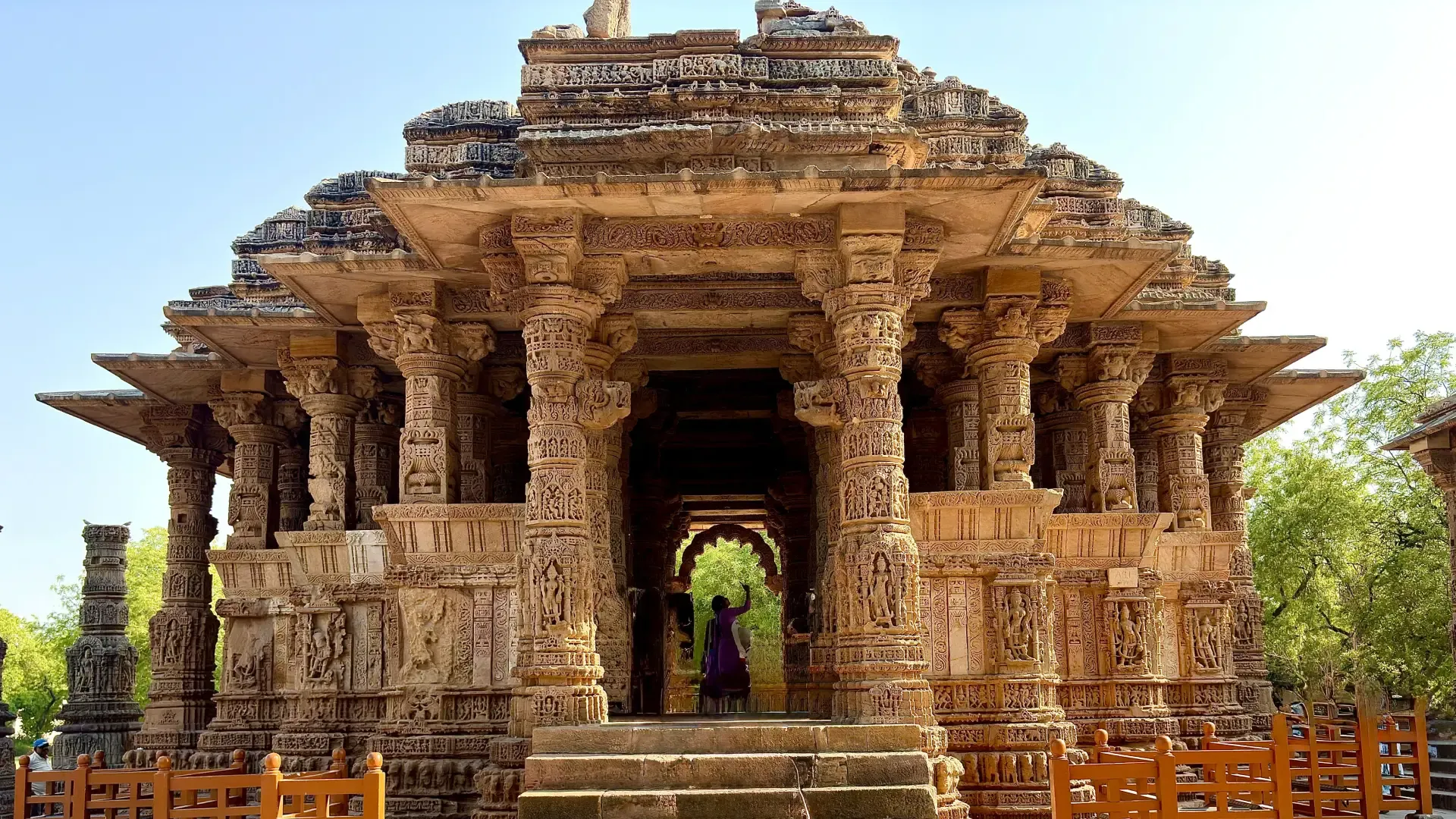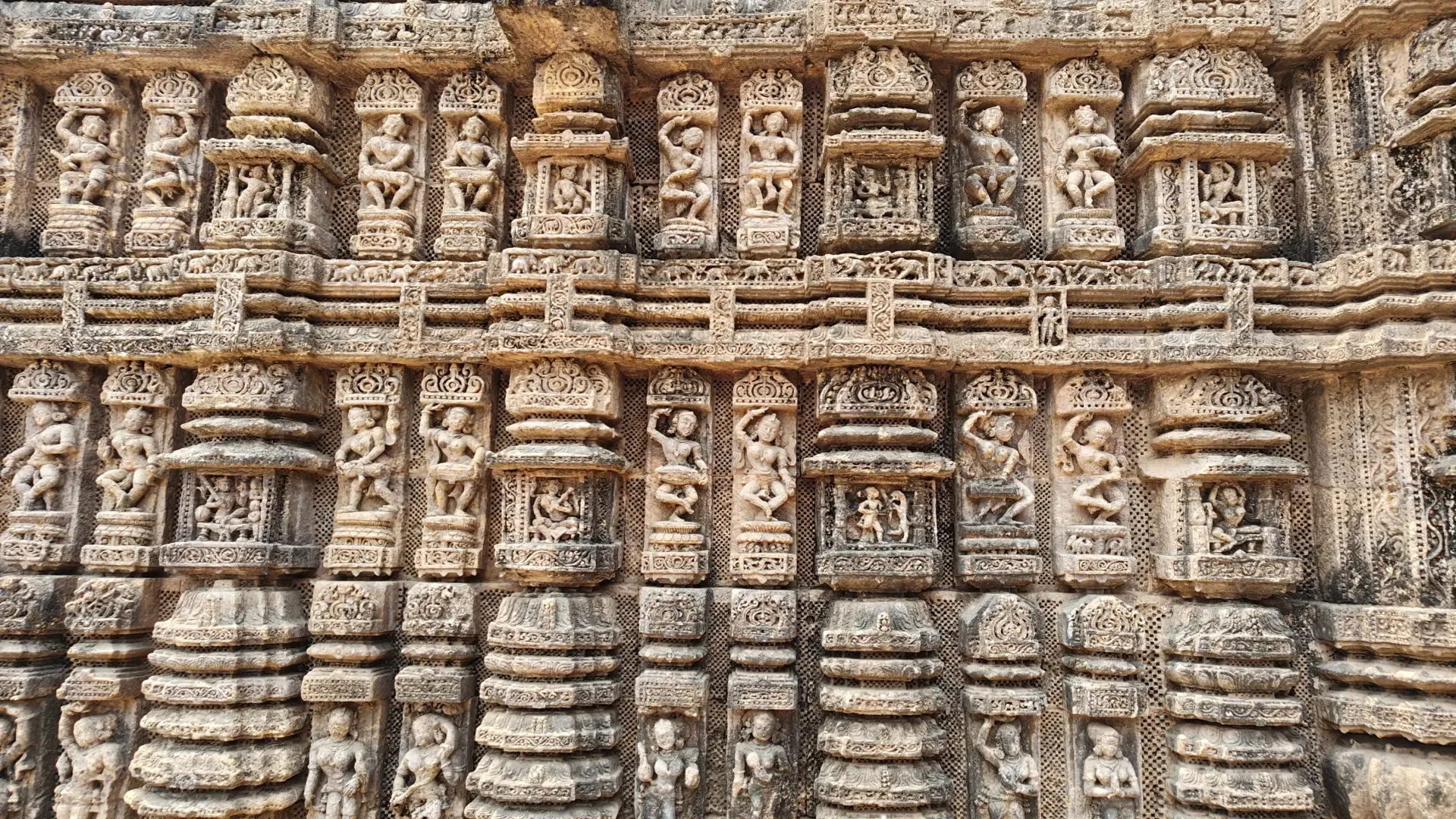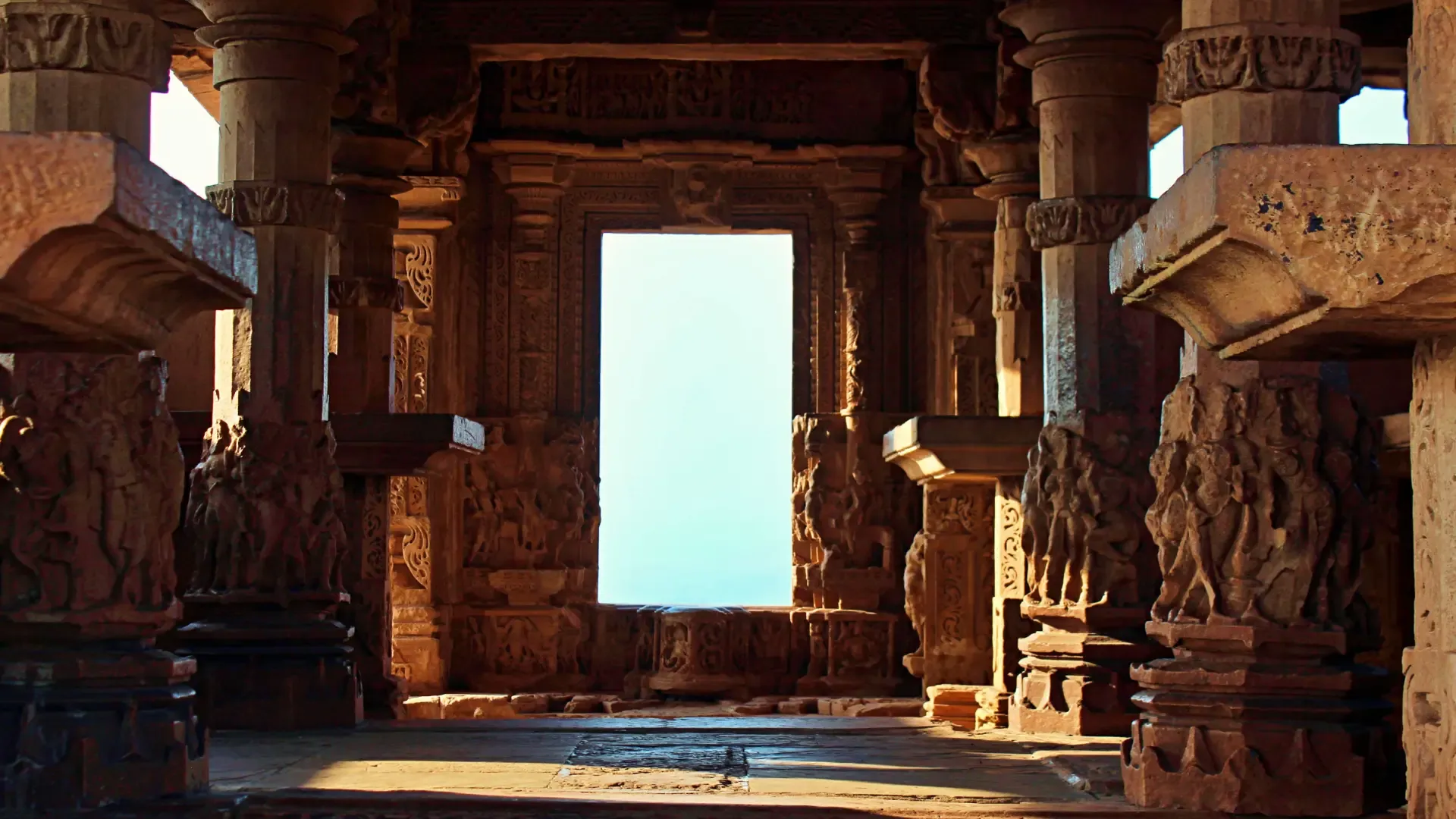
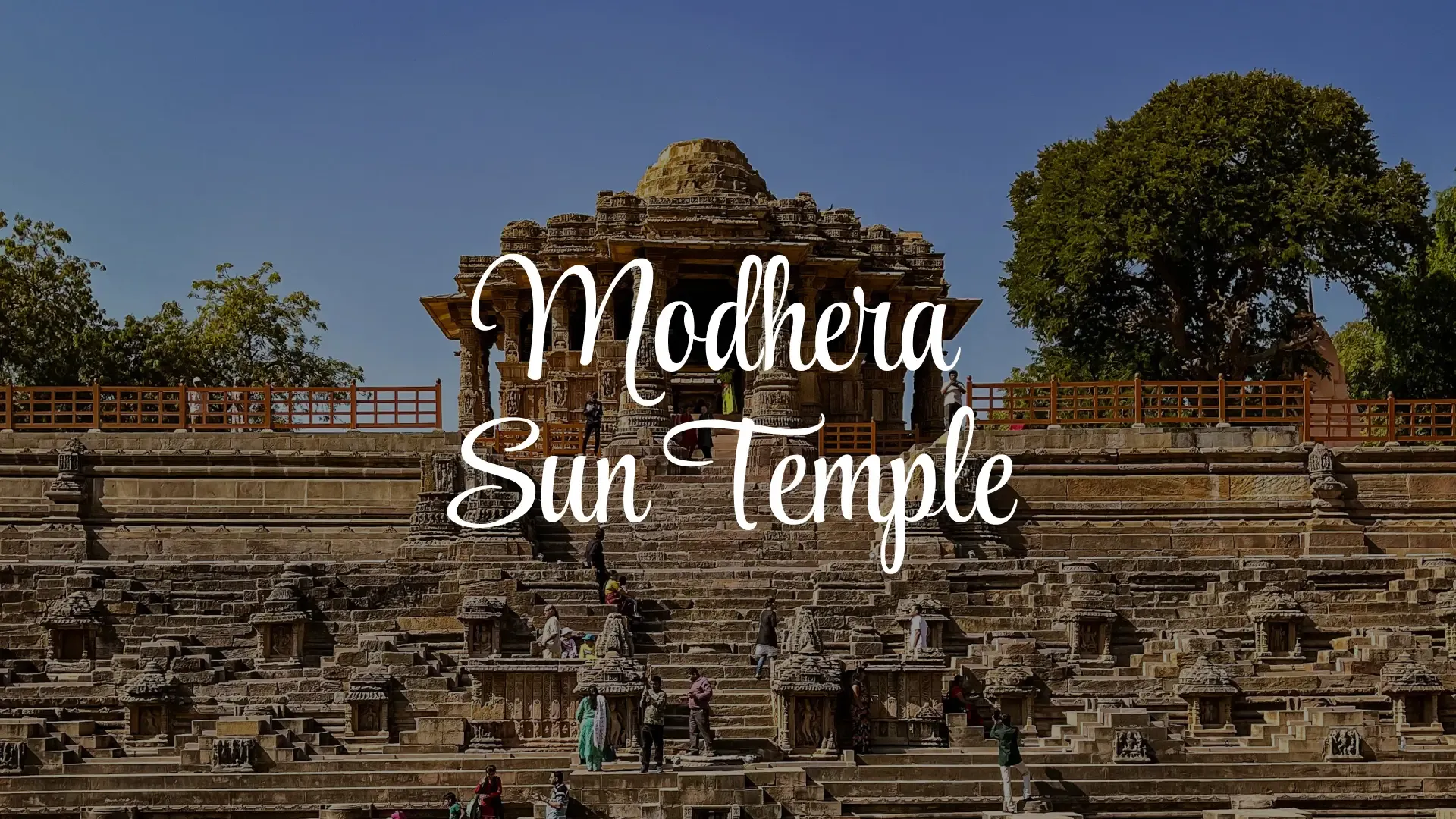
Modhera Sun Temple (Surya Mandir) is an eleventh-century architectural masterpiece of stone and celestial geometry, situated on the tranquil banks of the Pushpavati River in the Mehsana district of North Gujarat. Commissioned in 1026–27 CE by King Bhima I of the illustrious Solanki (Chalukya) dynasty to honour the solar deity Surya, this monument represents the crowning zenith of the Maru-Gurjara (Solanki) architectural style. Designed with astronomical precision so that the first rays of the rising sun during the Spring and Autumn Equinoxes illuminated the bejewelled golden idol of the Sun God inside the sanctum sanctorum, Modhera is celebrated globally alongside Konark as one of India's two greatest Sun temples.
Architectural Splendour & The Three Complex Zones
The temple complex is laid out along an east-west axis and is structurally divided into three distinct architectural components:
- Surya Kund (Ramakund - Stepped Water Tank): A monumental rectangular stepped reservoir measuring 50 by 20 metres, featuring intricate geometric stone steps, cascading flights, and 108 miniature carved shrines dedicated to Ganesha, Shiva (Natraj), Vishnu, and local solar avatars along its perimeter ghats.
- Sabha Mandapa (Hall of Religious Gatherings): An open, octagonal assembly hall supported by 52 exquisitely sculpted stone pillars (symbolizing the 52 weeks of the solar year). Every pillar is carved with breath-taking friezes depicting episodes from the Ramayana, Mahabharata, daily cosmic life, and celestial nymphs (*Apsaras*).
- Guda Mandapa (Inner Sanctum / Garbhagriha): The sanctum sanctorum constructed on an inverted lotus-shaped plinth, designed so that sunlight passed through pillared gateways directly into the sanctum pit during solar equinoxes.
Quick Facts Table
| Information | Verified Details |
|---|---|
| Destination Name | Modhera Sun Temple (Surya Mandir) |
| State & District | Gujarat, Mehsana District (Becharaji Road) |
| Built By & Year | King Bhima I, Solanki Dynasty (1026–1027 CE) |
| Architectural Style | Maru-Gurjara (Solanki Master Stone Masonry) |
| ASI Monument Status | Protected Monument of National Importance (ASI) |
| Visiting Timings | 07:00 AM to 06:00 PM (Daily) |
| Evening Light & Sound Show | 07:00 PM to 08:00 PM (Daily 3D Projection Mapping) |
| ASI Entry Ticket Fee | ₹25 for Indian Citizens; ₹300 for Foreign Tourists |
| Nearest Railway Station | Mehsana Junction (MSH – 25 km); Ahmedabad (100 km) |
| Nearest Airport | Sardar Vallabhbhai Patel International Airport (AMD – 95 km) |
Suggested 1-Day Heritage Circuit Itinerary
Ahmedabad → Modhera Sun Temple → Patan Rani Ki Vav Circuit
Depart Ahmedabad via Mehsana Highway (SH-41) towards Modhera (approx. 95 km / 2 hours).
Explore Modhera Sun Temple: admire the 108 shrines of Surya Kund, the 52 carved pillars of Sabha Mandap, and the ASI Museum.
Drive 35 km to Patan; enjoy traditional Kathiyawadi Gujarati lunch.
Visit UNESCO World Heritage Rani Ki Vav stepwell and Patola double-ikat silk weaving workshops in Patan.
Optional: Return to Modhera for the spectacular 3D Projection Light & Sound Show before heading back to Ahmedabad.
How to Reach Modhera Sun Temple
1. By Road
Modhera is 25 km from Mehsana, 35 km from Patan, and 95 km from Ahmedabad via the 4-lane State Highway 41. Frequent GSRTC buses and private AC taxis connect Ahmedabad and Mehsana with Modhera village.
2. By Train
The nearest major railway station is Mehsana Junction (MSH – 25 km), well connected on the Western Railway line with express trains to Delhi, Mumbai, Jaipur, and Ahmedabad.
Authentic Regional Food & Local Delicacies
While exploring Modhera Sun Temple (Mehsana, Gujarat), indulge in authentic regional cuisine. Savor traditional multi-course thalis featuring regional breads (Rotla/Bhakri/Puri), rich seasonal vegetable curries, freshly churned buttermilk (Chaas), and famous regional sweet delicacies.