

Introduction
Omkareshwar Jyotirlinga, situated in the Khandwa district of Madhya Pradesh, is one of the twelve sacred Jyotirlingas dedicated to Lord Shiva. Set along the holy banks of the Narmada River, the entire island on which the main temple stands is naturally shaped in the sacred Hindu symbol 'OM' (🕉️). Known geographically as Mandhata or Shivapuri Island, this sacred land is surrounded by the quiet flowing Narmada on one side and its tributary, the Kaveri (a local branch), on the other, creating a deeply spiritual riverine sanctuary.
According to ancient Hindu scripture, the Jyotirlinga at Omkareshwar is divided into two distinct physical entities: Omkareshwar (located on the Mandhata island) and Mamleshwar (also known as Amareshwar, located on the south bank of the Narmada mainland). Devotees consider the pilgrimage complete only after offering prayers at both temples, which together embody a single divine light manifestation of Shiva.
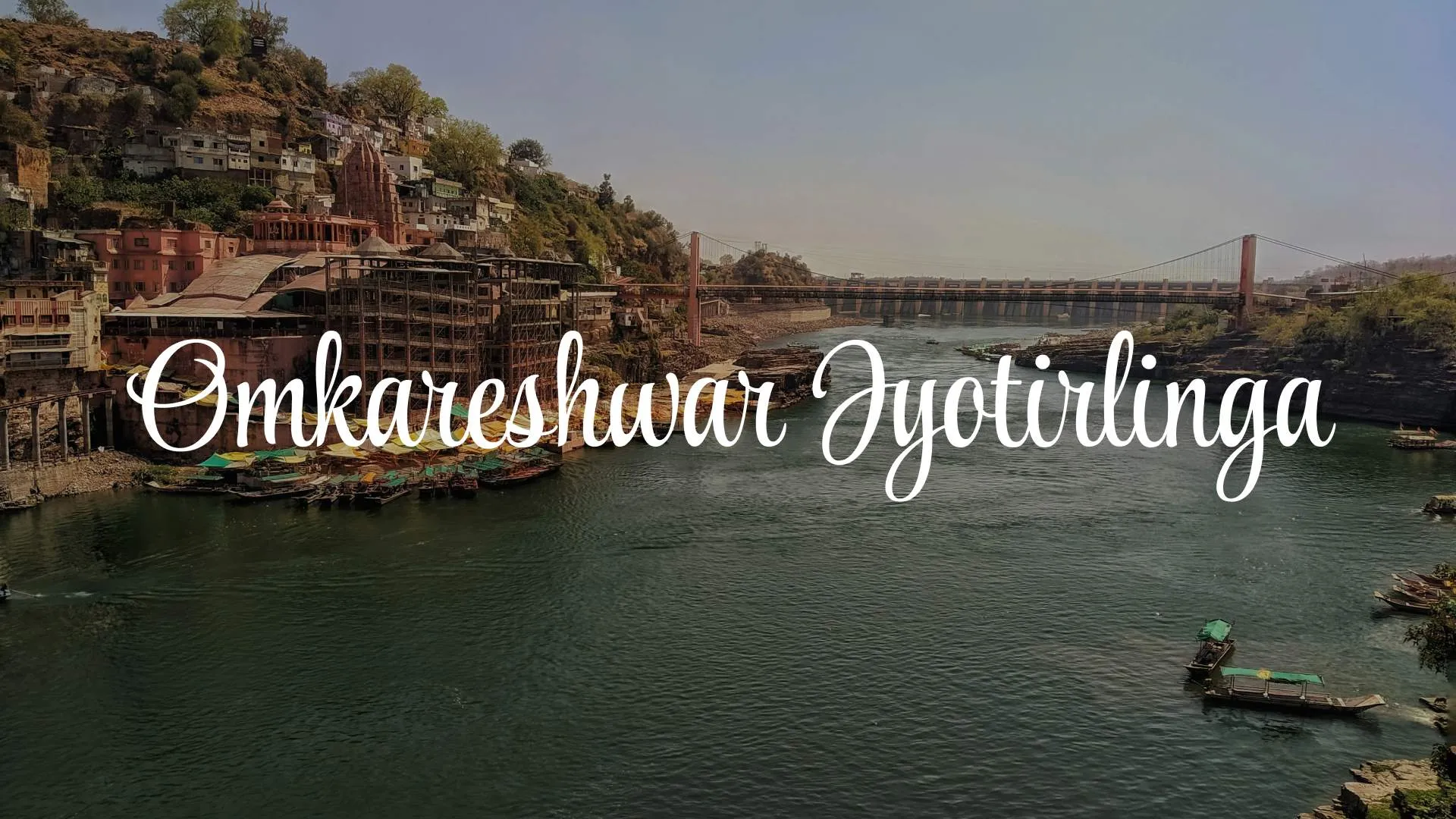
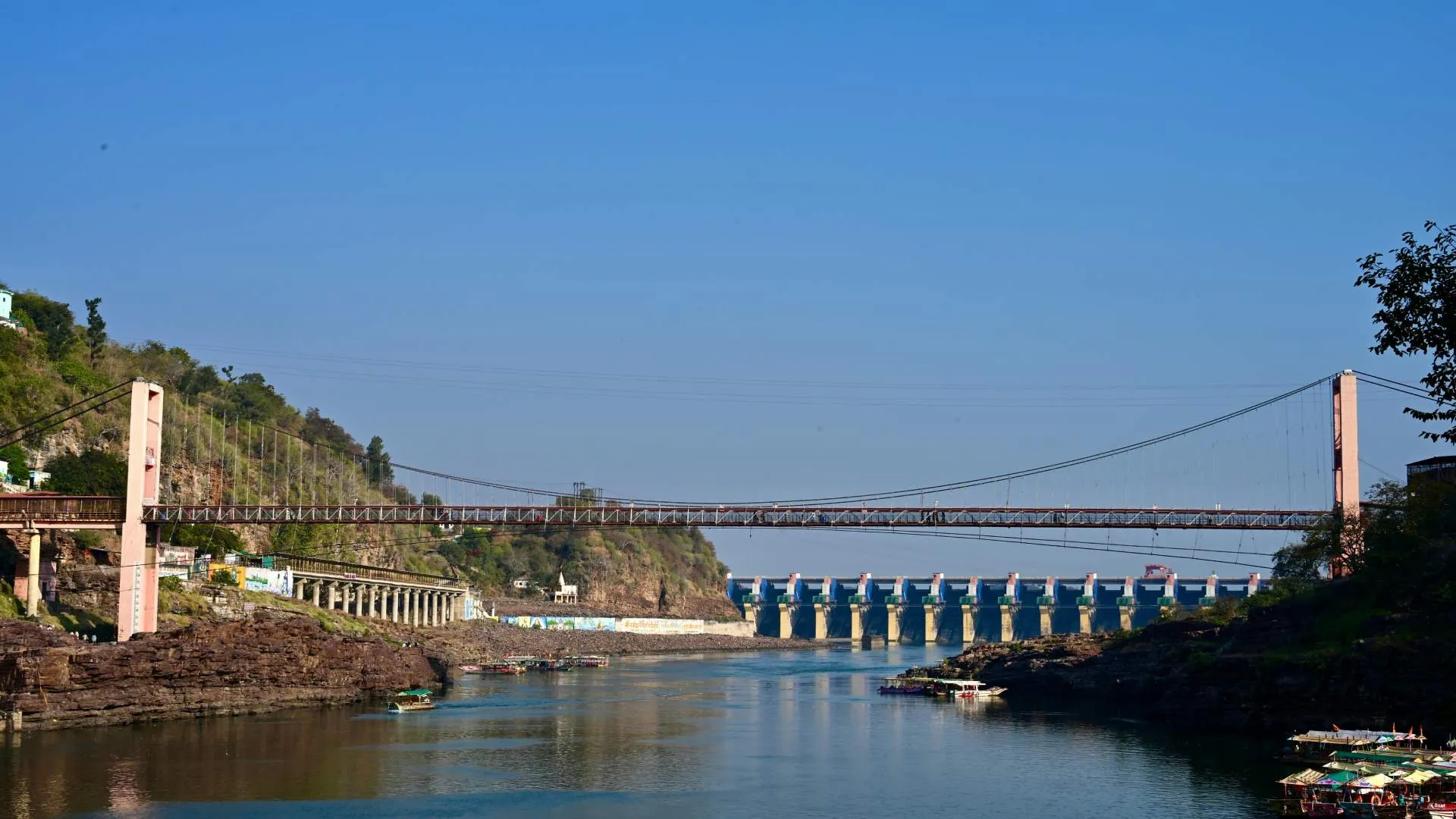
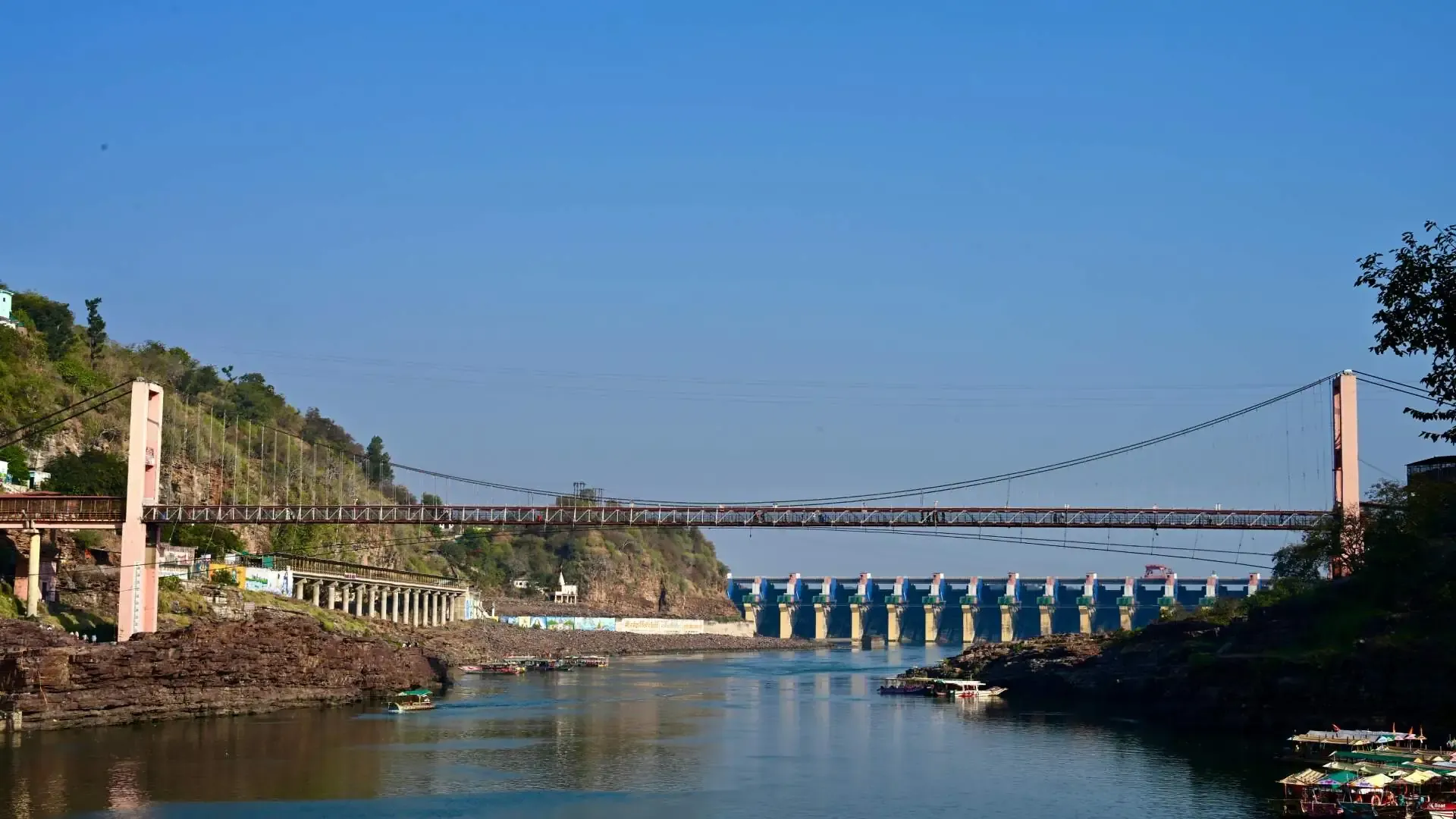
Beyond its profound religious sanctity, Omkareshwar captivates travelers with its dramatic natural beauty. Suspension footbridges (Jula Pul) spanning across the turquoise Narmada, ancient cliff-side stone temples, sacred ghats echoing with morning chants, and the famous 7 km Island Parikrama path make Omkareshwar a serene and deeply rewarding destination for spiritual seekers, trekkers, and heritage lovers alike.
Why Visit Omkareshwar Jyotirlinga?
- One of the 12 sacred Jyotirlinga shrines of Lord Shiva, situated on a naturally 'OM' shaped island.
- Houses twin sacred shrines — Omkareshwar on the island and Mamleshwar on the mainland.
- Situated along the holy Narmada River, considered one of India's most sacred rivers.
- Famous 7 km Mandhata Island Parikrama route passing by ancient shrines, caves, and scenic river cliffs.
- Experience dramatic views from the suspension bridges (Jhula Pul) spanning across the Narmada River.
- A crucial destination along the historic Narmada Parikrama pilgrimage route.
- Conveniently located near Indore, allowing for an easy combined trip with Ujjain Mahakaleshwar.
History
The history and spiritual origins of Omkareshwar are deeply embedded in Puranic legends. According to the Shiva Purana, the mountain deity Vindhya sought to elevate his spiritual stature and performed severe penance worshipping Lord Shiva at this spot. Pleased with his devotion, Lord Shiva appeared and created a lingam of divine light. At the request of the gods and sages, Shiva split the Lingam into two parts — Omkareshwar on the island and Mamleshwar on the mainland — allowing both to reside permanently for the welfare of humanity.
Another major legend attributes the site to King Mandhata of the Ikshvaku dynasty (an ancestor of Lord Rama). King Mandhata performed intense austerities atop the island hills until Lord Shiva manifested, leading to the island being named Mandhata Island in his honor. The site is also sacred in Advaita Vedanta history; it was in a cave at Omkareshwar along the Narmada banks that the young Adi Shankaracharya met his Guru, Govinda Bhagavatpada, receiving initiation into monastic life.
Historically, the region came under the rule of several prominent dynasties, including the Paramaras of Malwa, the Chauhans, and later the Maratha Holkars of Indore. Queen Ahilyabai Holkar of Indore played a major role in restoring and patronizing the temple complex during the 18th century, establishing daily scriptural recitations and funding temple infrastructure that continues to serve pilgrims today.
Main Attractions
Shri Omkareshwar Temple (Mandhata Island)
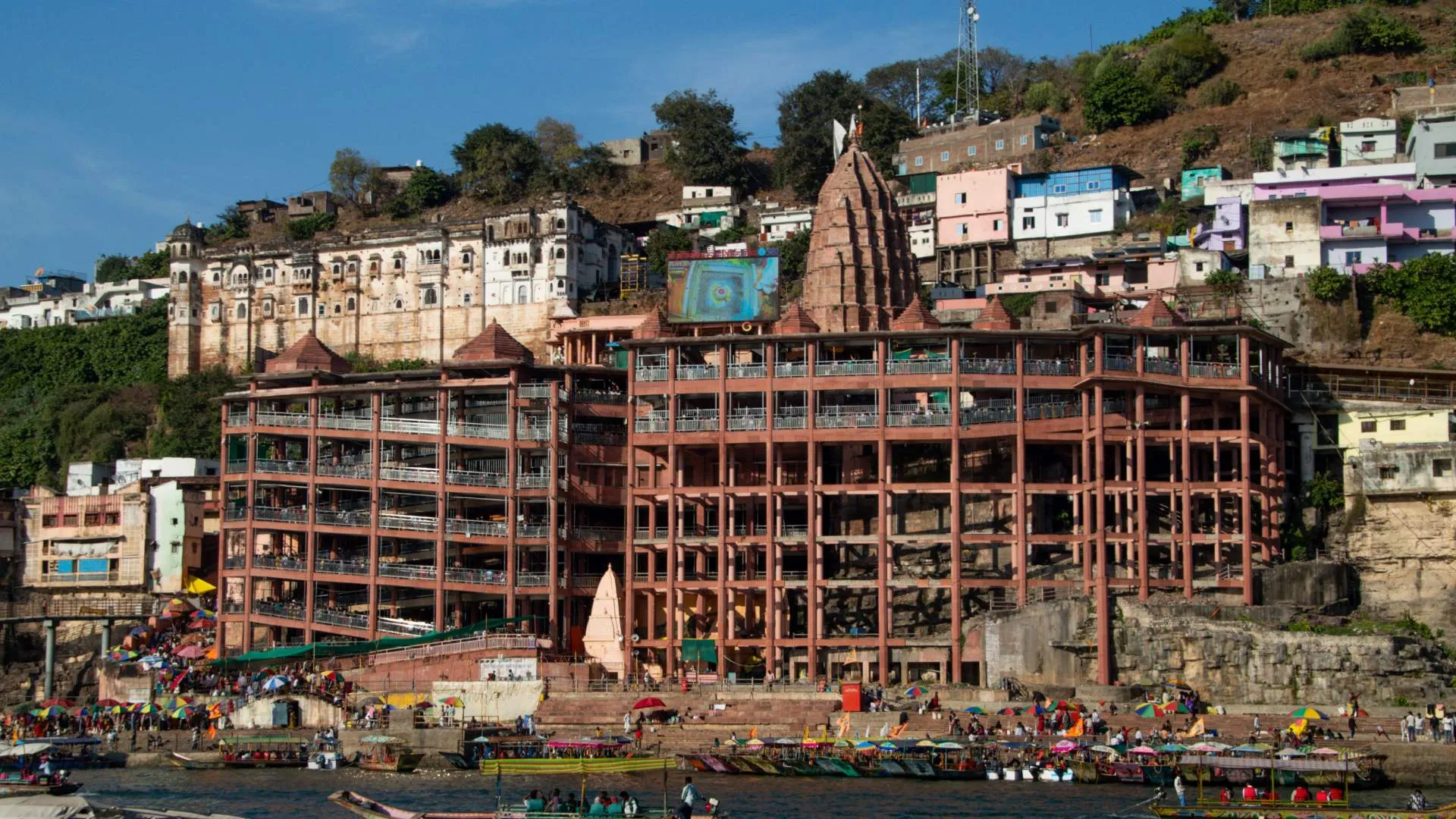
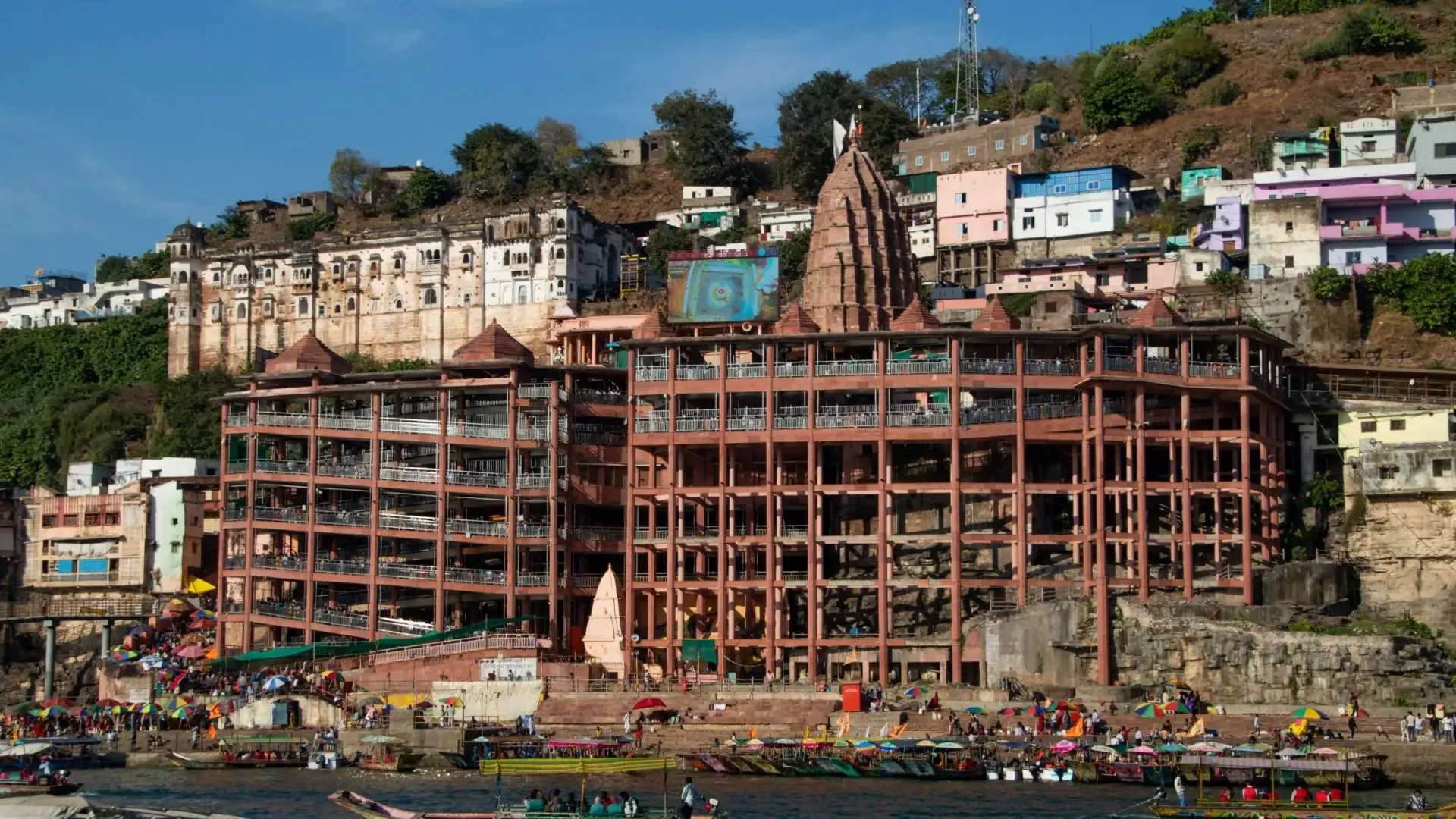
Perched on a hill on Mandhata Island, the main Omkareshwar Temple rises across five storeys. The sanctum sanctorum does not feature a traditional isolated Shiva Lingam; instead, a natural rock formation depicting the Jyotirlinga is set directly into the earth floor, surrounded by water. The temple features a grand pillared hall (Mahamandapa) supported by elaborately carved stone columns portraying intricate floral and geometric motifs.
Shri Mamleshwar Temple (Mainland)
Situated on the southern bank of the Narmada River directly opposite Mandhata Island, Mamleshwar (Amareshwar) Temple is the second half of the dual Omkareshwar Jyotirlinga. Recognized as an ASI protected monument, this ancient stone temple showcases exquisite classical Paramara architecture. The sanctum houses a polished Shiva Lingam surrounded by historic inscriptions detailing royal land grants.
Mandhata Island Parikrama (7 km Route)
The 7-kilometre Parikrama around Mandhata Island is a sacred ritual trek undertaken by thousands of pilgrims. The paved walking trail ascends and descends scenic forested hills, passing by numerous ancient shrines including the Gauri Somnath Temple, Khedapati Hanuman, Siddhanath Temple, and the confluence of Narmada and Kaveri rivers (Sangam).
Siddhanath Temple
Located on a high plateau along the Parikrama path, the Siddhanath Temple is a magnificent 10th-century architectural ruin. Built on a raised stone plinth, the temple is famous for its massive carved stone pillars, detailed friezes of elephants, and fine ceiling panels. Despite historical damage, its structural scale reflects the high artistic standards of the Paramara era.
Gauri Somnath Temple
Situated along the hilltop Parikrama route, the Gauri Somnath Temple houses a massive 6-foot-tall black stone Shiva Lingam with a smooth, mirror-like polish. Local legend holds that the lingam possessed prophetic qualities in ancient times. Beside the main shrine sits a large stone Nandi bull facing the deity.
Narmada & Kaveri Sangam
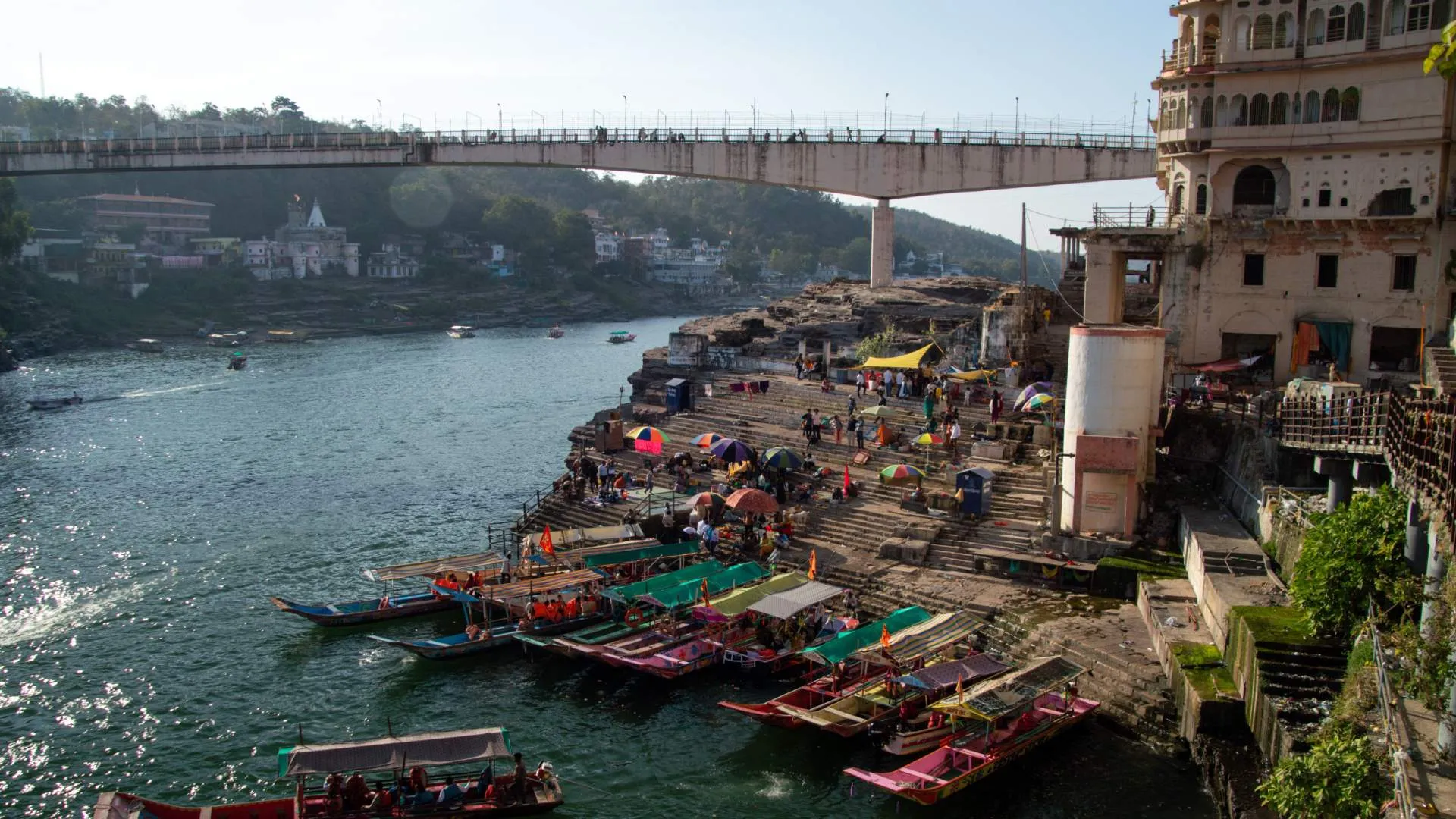
At the western tip of Mandhata Island lies the holy confluence (Sangam) where the Kaveri River merges back into the main channel of the Narmada River. Taking a holy bath at this serene, rocky confluence is considered highly auspicious, and boatmen offer scenic river rides reaching this spot.
Adi Shankaracharya Cave & Statue of Oneness
Located beneath the main Omkareshwar temple complex is the historic cave where Adi Shankaracharya meditated under Guru Govinda Bhagavatpada. Nearby atop Mandhata hill, the Madhya Pradesh government inaugurated the grand Ekatmata Ki Pratima (Statue of Oneness), a 108-foot bronze statue of Adi Shankaracharya, alongside an Advaita Vedanta museum.
Architecture / Natural Highlights
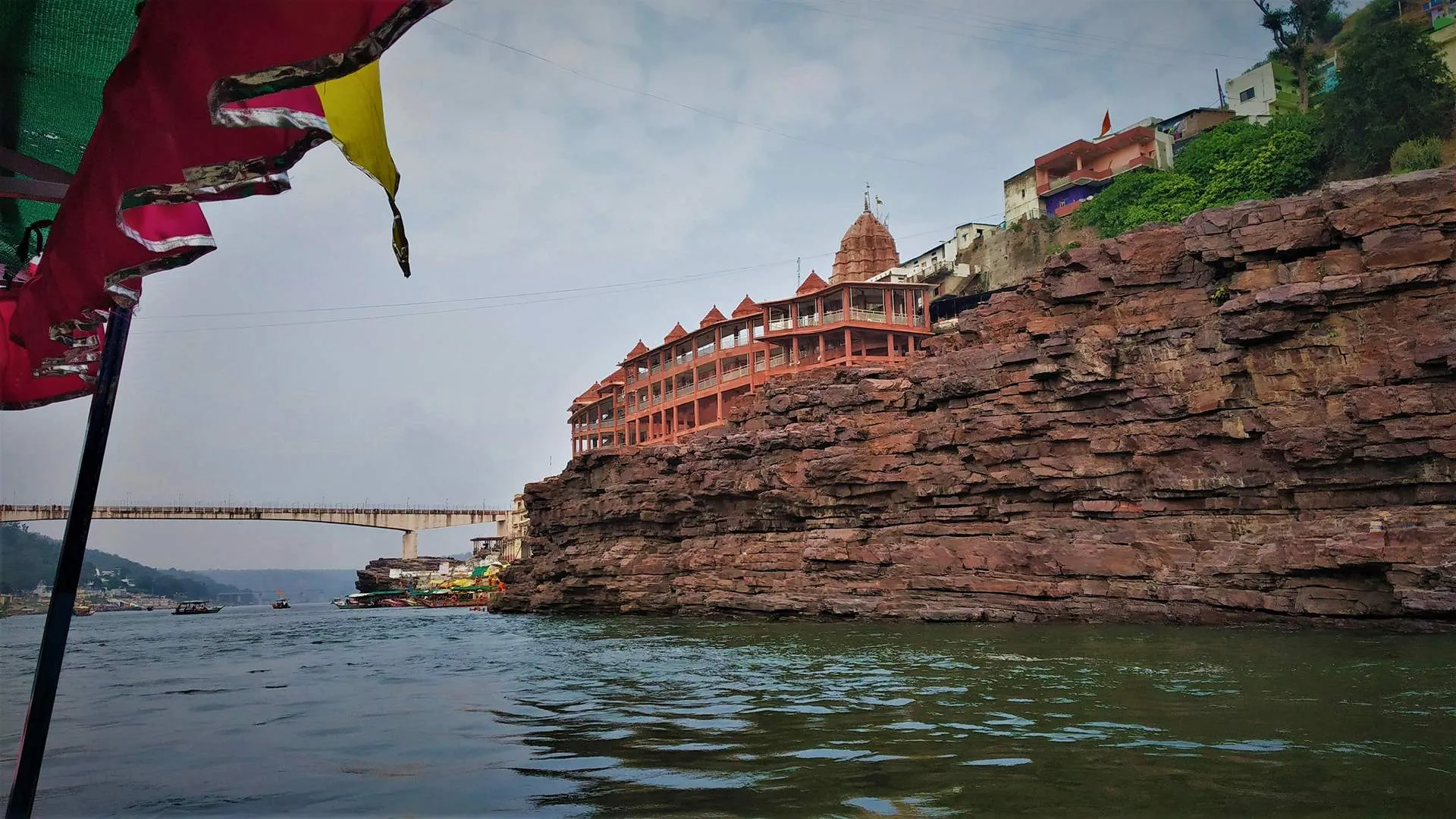
The architecture of Omkareshwar Temple represents a multi-layered combination of Nagara and Maratha styles built across different eras. The five-storey temple structure uses reddish-buff sandstone quarried from Narmada cliff beds. The lower storeys contain ancient pillared halls featuring carved friezes of warriors and celestial musicians, while the upper storeys house separate shrines dedicated to Mahakaleshwar, Siddhanath, and Gupteshwar.
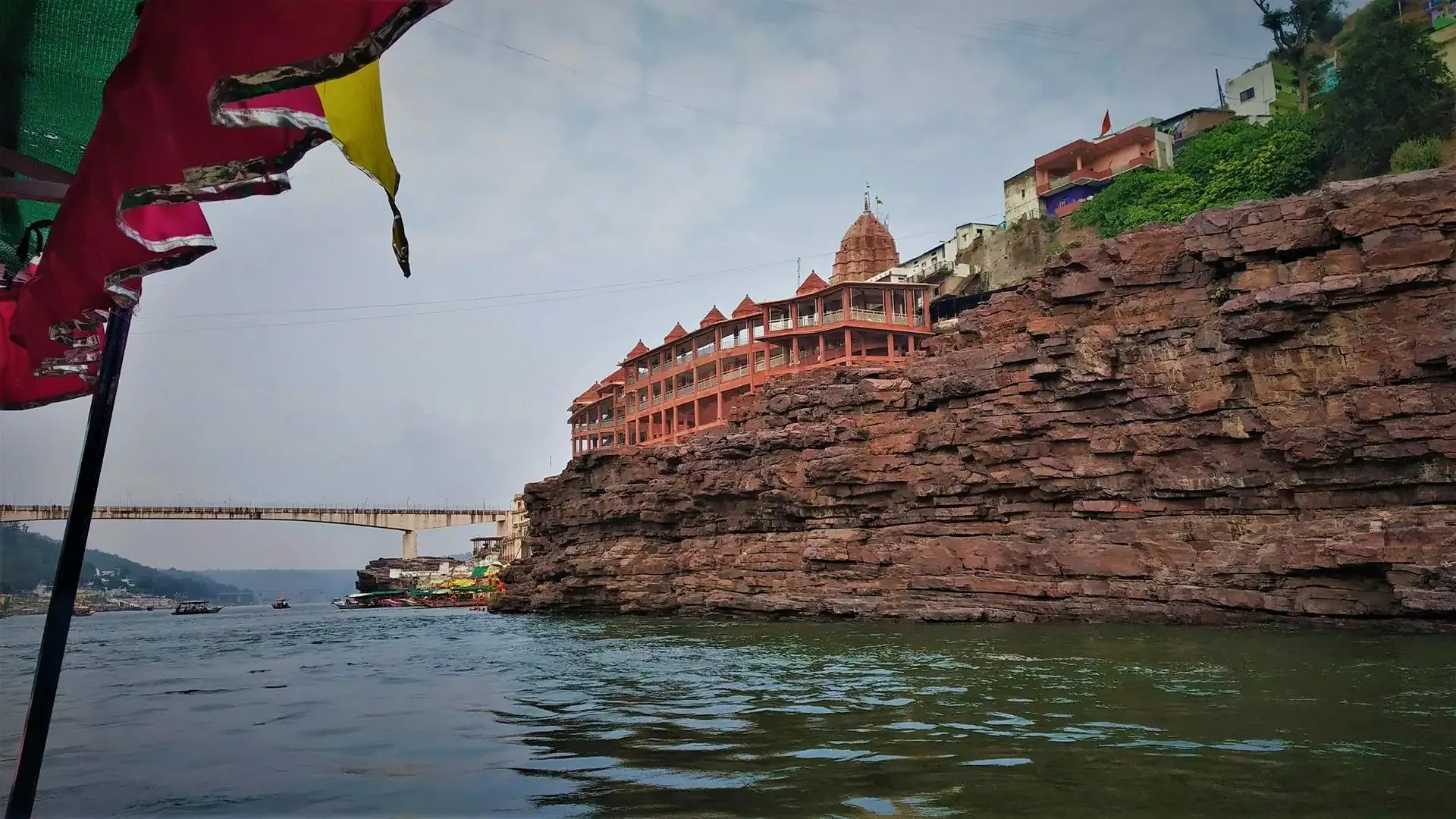
Naturally, Omkareshwar is a geological wonder. The Narmada River cuts through steep, vertical basalt and quartzite gorges, carving the island hill into the shape of the sacred 'OM' symbol when viewed from above. The clear turquoise water of Narmada flowing between high rocky cliffs, dense deciduous forests, and ancient stone ghats creates an extraordinary landscape of spiritual serenity.
Best Time to Visit
Summer (April to June)
Summers are dry and hot, with temperatures reaching up to 40°C. The Parikrama walk can be exhausting during midday. Early morning visits (6:00 AM to 9:00 AM) and evening boat rides are recommended if traveling during summer.
Monsoon (July to September)
The monsoon season transforms Omkareshwar into a breathtaking green sanctuary. The Narmada River swells with water, and waterfalls cascade down river cliffs. While river boating may be restricted during heavy floods, the scenery is magnificent.
Winter (October to March)
Winter is the absolute best time to visit Omkareshwar. Temperatures range comfortably between 12°C and 26°C. Cool weather makes completing the 7 km island Parikrama and exploring cliff temples extremely pleasant.
Recommended Season: October to March offers ideal travel weather. Visiting during Mahashivratri or the holy month of Sawan provides an intense spiritual atmosphere.
Entry Fee & Timings
Temple Opening Time: 5:00 AM
Temple Closing Time: 10:00 PM
Afternoon Break: 12:20 PM to 1:15 PM (Maha Bhog)
General Darshan: Free
Boat Ride Charges (Narmada River): ₹100 – ₹200 per person (shared) / ₹800 – ₹1,200 per boat (private round trip to Sangam).
Parking: Paid multi-level parking available on the mainland near the bridge (₹50 for cars, ₹20 for two-wheelers).
Timings and fees may change. Please verify before planning your visit.
Things to Do
- Offer prayers at the twin Jyotirlinga shrines of Omkareshwar and Mamleshwar.
- Embark on the 7-km Mandhata Island Parikrama walk passing cliff-side temples and forests.
- Take a scenic motorboat ride along the Narmada River gorge to the Narmada-Kaveri Sangam.
- Cross the Narmada River via the suspension footbridges (Jhula Pul) for panoramic views.
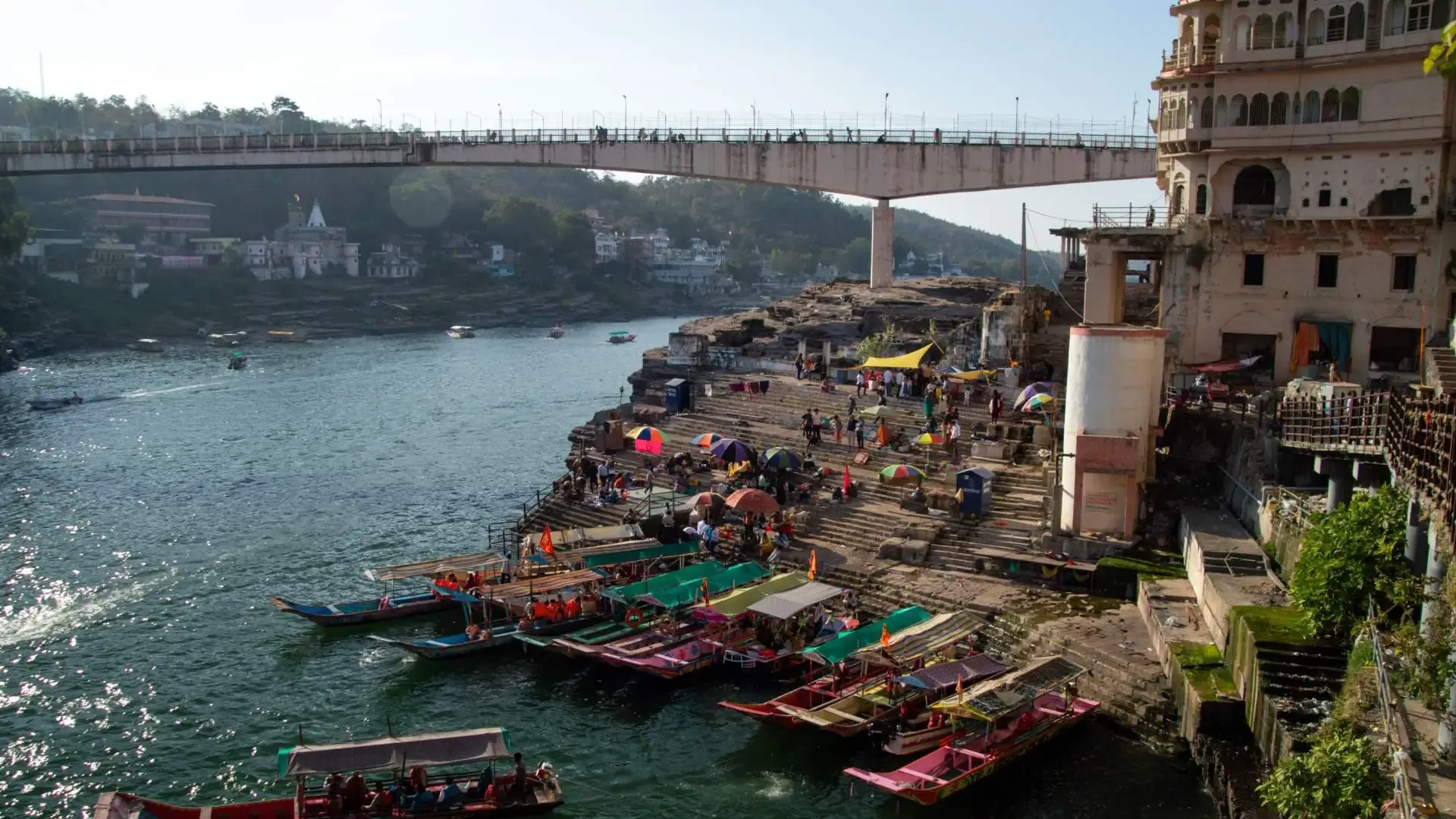
- Take a holy dip in the clean waters of the Narmada River at Koti Tirth Ghat or Nagar Ghat.
- Visit the historic cave of Adi Shankaracharya beneath the main temple.
- Explore the 108-foot Statue of Oneness (Ekatmata Ki Pratima) atop Mandhata hill.
- Examine ancient Paramara stone carvings at the ruined Siddhanath Temple.
- Attend the peaceful evening Narmada Aarti conducted along the riverbank ghats.
- Sample delicious local MP snacks like Poha-Jalebi and Narmada river fish delicacies (in town areas).
How to Reach
By Road: Omkareshwar is well-connected by paved highways to major cities across Madhya Pradesh. Regular state buses, private sleeper coaches, and taxis operate continuously between Indore (78 km), Ujjain (140 km), Khandwa (70 km), and Bhopal (255 km).
By Train: The nearest broad-gauge railway station is Indore Junction (78 km) and Khandwa Junction (70 km), which connect to major Indian cities including Delhi, Mumbai, Bengaluru, and Kolkata. Omkareshwar has a small meter-gauge station (Omkareshwar Road - Omkareshwar Road 12 km), though major trains stop at Khandwa or Indore.
By Air: Devi Ahilya Bai Holkar Airport in Indore (IDR) is the nearest airport, located roughly 85 km away. It offers direct daily flights to major Indian metros. Taxis from Indore airport take about 2 hours to reach Omkareshwar via the Indore-Khandwa highway.
Nearby Attractions
- Mamleshwar Temple (Mainland) — The twin shrine of Omkareshwar featuring classical Paramara architecture.
- Statue of Oneness (2 km) — 108-foot grand bronze statue of Adi Shankaracharya on Mandhata hill.
- Maheshwar (65 km) — Historic riverfront town famous for Maheshwar Fort, Narmada Ghats, and Maheshwari sarees.
- Indore City (78 km) — Culinary capital of MP featuring Rajwada Palace, Sarafa Bazaar, and Lal Bagh Palace.
- Ujjain Mahakaleshwar (140 km) — Famous Jyotirlinga city, forming a complete MP spiritual circuit.
- Khandwa (70 km) — Historical city featuring Dada Dhuniwale Ashram and birth residence of Kishore Kumar.
- Indirasagar Dam (Punasa 35 km) — Massive hydroelectric dam on the Narmada River creating a vast reservoir.
- Kajligarh Fort Ruins (55 km) — Scenic ruined forest fort and waterfall spot near the Indore highway.
Travel Tips
- Start your temple darshan early in the morning around 6:00 AM to avoid long queues and midday heat.
- Ensure you visit both Omkareshwar and Mamleshwar temples to complete your Jyotirlinga pilgrimage.
- Wear comfortable walking shoes if undertaking the 7 km Mandhata Island Parikrama trek.
- Be cautious while bathing in the Narmada River; stick to designated ghats with protective railings.
- Negotiate boat ride rates beforehand or use government-fixed rate counters near the ghats.
- Carry sufficient cash as small shops, boatmen, and flower vendors may not accept digital payments.
- Senior citizens should use the suspension bridges or hire auto-rickshaws available on the island.
- Mobile phones and cameras are restricted inside the main sanctum; lockers are available near the gate.
- Beware of wild monkeys on Mandhata island; keep food items and prasad bags tucked inside your backpacks.
- Combine your trip with Maheshwar (65 km away) for a perfect 2-day Narmada heritage tour.
Food & Local Cuisine
Dining in Omkareshwar is simple, traditional, and predominantly vegetarian due to the holy nature of the town. Local dhabas and eateries serve delicious Central Indian thalis featuring Dal Bafla, Sev Tamatar Sabzi, Aloo Gobi, and Tandoori Roti. Breakfast favorites include hot Poha-Jalebi, Samosas, and Kachoris served with sweet chutney.
During festival seasons, sweet shops prepare fresh Mawa Bati, Rabri, and Gulab Jamun. The Narmada Resort (MP Tourism) provides the best clean dining environment in town, serving quality North Indian and South Indian vegetarian meals overlooking the river.
Shopping
Shopping in Omkareshwar centers around religious souvenirs and Narmada River artifacts. The most famous local keepsake is the Narmada Shivling (Banalinga) — naturally river-polished smooth stones collected from the Narmada bed, considered self-sacred for home worship.
You can also purchase brass puja lamps, rudraksha rosaries, framed religious pictures, and wooden toys from shops lining the approach paths to the temple. For regional textile shopping including authentic Maheshwari sarees, plan a short trip to nearby Maheshwar (65 km).
Photography Tips
Omkareshwar offers spectacular landscape and heritage photography opportunities. The best vantage point for capturing Mandhata Island and the temple complex is from the suspension footbridges (Jhula Pul) or during a boat ride along the Narmada River gorge.
Golden hour (early morning and sunset) light on the turquoise Narmada water against the high sandstone cliffs creates magical photo compositions. Frame shots of Mamleshwar Temple using its classical stone pillars and doorways. Photography is strictly prohibited inside the main sanctum of both temples. Drones are restricted near temple security zones.
Quick Facts
Location: Mandhata / Omkareshwar, Khandwa District, Madhya Pradesh
State: Madhya Pradesh
District: Khandwa
Taluka: Punasa
Village/City: Mandhata (Omkareshwar)
Elevation: 180 metres above sea level
Established / Built In: Prehistoric / 10th-18th Century Additions
Built By: Paramara Rulers / Restored by Ahilyabai Holkar
UNESCO Status: Not Listed
Famous For: 'OM' Shaped Sacred Island, Dual Jyotirlinga, Narmada River Gorge, Island Parikrama
Ideal Duration: 1 – 2 Days
Best Season: October to March
Ideal For: Pilgrims, Spiritual Seekers, Nature Lovers, Photographers, Families
Google Maps URL: https://www.google.com/maps/search/Omkareshwar+Jyotirlinga+Khandwa+Madhya+Pradesh
Frequently Asked Questions
Why is Omkareshwar famous?
Omkareshwar is famous as one of the 12 sacred Jyotirlinga shrines of Lord Shiva, uniquely located on an island naturally shaped in the Hindu sacred symbol 'OM' along the Narmada River.
Are Omkareshwar and Mamleshwar two different temples?
Yes, physically they are two separate temples — Omkareshwar on Mandhata island and Mamleshwar on the mainland. However, spiritually they are considered two halves of the same single Jyotirlinga.
How long is the Mandhata Island Parikrama?
The Mandhata Island Parikrama path is approximately 7 kilometres long and takes about 2 to 3 hours to complete on foot.
How far is Omkareshwar from Indore?
Omkareshwar is located approximately 78 km south of Indore and takes about 2 hours by car via the Indore-Khandwa highway.
Can I take a boat to reach the Omkareshwar Temple?
Yes, regular motorboats and rowing boats operate across the Narmada River connecting the mainland ghats to the island temple steps.
Is boating safe on the Narmada River at Omkareshwar?
Yes, boat rides are generally safe and life jackets are provided. However, boating may be temporarily suspended during heavy monsoon flooding.
What is the best time to visit Omkareshwar?
The best time to visit Omkareshwar is from October to March when the weather is cool and pleasant for temple darshan and outdoor island trekking.
Final Thoughts
Omkareshwar Jyotirlinga is a sacred sanctuary where natural splendor and deep spiritual devotion merge into a sublime experience. Standing on the suspension bridge as the turquoise Narmada flows through steep rocky cliffs, listening to temple bells reverberate across Mandhata Island, one feels a profound sense of peace and divine presence.
Whether you are completing the 12 Jyotirlinga circuit, undertaking the Narmada Parikrama, or simply exploring Central India's rich heritage, Omkareshwar promises a journey of renewal. Plan your pilgrimage, walk the sacred island trail, and let the timeless grace of Lord Shiva and Holy Narmada enrich your soul.
Optimized 1-Day & 2-Day Travel Itineraries
To help you experience the very best of Omkareshwar Jyotirlinga at a comfortable pace, here is a structured step-by-step itinerary covering morning highlights, afternoon cultural exploration, and golden hour viewpoints:
Core Heritage & Signature Sightseeing
Extended Circuit, Nature & Culinary Trail
Travel Essentials & Quick Facts
October to March
Pleasant weather & clear views
06:00 AM – 06:00 PM
Standard public entry hours
Free Entry / Nominal Charges
On-site / Online counter
1 to 2 Days
Comprehensive sightseeing
Available on-site
Designated parking plaza
₹1,500 – ₹3,500 / person
Includes travel, entry & food
Photo Gallery
Get Directions
Planning to visit? Click below to open Google Maps with the exact coordinates.
Open in Google MapsGet Daily Travel Alerts & Hidden Gems
Join 10,000+ travellers on WhatsApp for weekend road trips and verified guides.
Frequently Asked Questions
Answers to common visitor questions
Visiting hours for Omkareshwar Jyotirlinga: Timings, Parikrama & Travel Guide are generally 6:00 AM to 6:00 PM daily. We recommend visiting during early morning or sunset for the best experience.
Shivrajpur Beach: The Ultimate Guide
Pushkar Lake: Complete Guide to Rajasthan's Holiest Sacred Lake
Related Experiences
Jal Mahal Jaipur: Complete Travel Guide, History, Architecture & Night View
Explore Guide →
Saputara: The Ultimate Travel Guide to Gujarat's Misty Hill Station
Explore Guide →
Salangpur Hanumanji
Explore Guide →
80th Independence Day of India (2026): Red Fort Parade, Theme, History & Travel Guide
Explore Guide →
Dwarkadhish Temple: The Sacred Kingdom of Lord Krishna
Explore Guide →